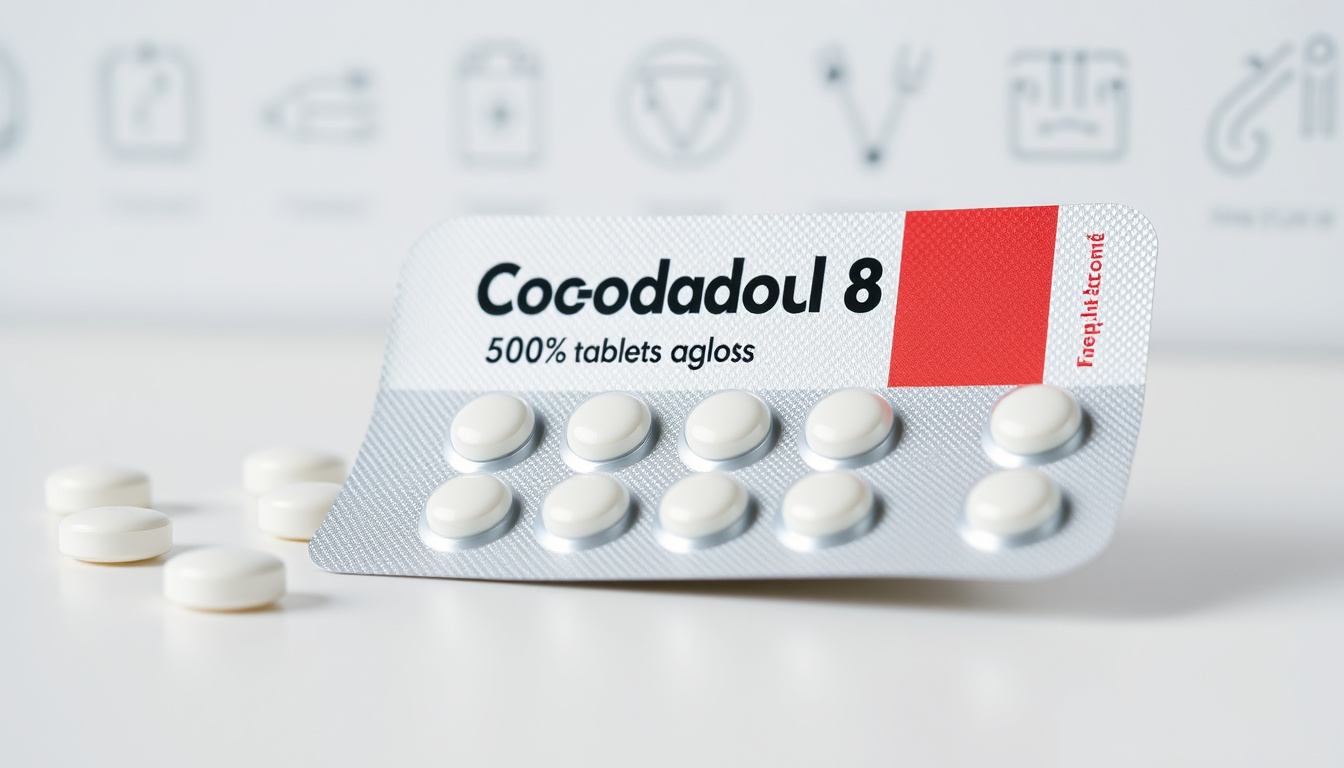

If you’ve ever reached for a pharmacy painkiller only to wonder whether it contained something stronger than standard paracetamol, you’re not alone. Co-codamol 8/500 — a combination of codeine phosphate and paracetamol — sits in that middle ground between everyday painkillers and prescription-only opioids. Used correctly for short-term acute pain, it can genuinely help; misused or taken too long, the stakes get serious fast. This guide walks you through what the NHS and MHRA say about its uses, dosing, side effects, and what you genuinely need to know before you take your first tablet.
Strength: 8mg codeine phosphate + 500mg paracetamol · Primary Use: Short-term acute moderate pain · Max Daily Doses: Up to 4 times in 24 hours · Gap Between Doses: 4-6 hours · Examples of Pain: Headaches, toothache, migraine
Quick snapshot
- 1-2 tablets up to 4 times daily, max 8 tablets per 24 hours (NHS UK)
- Leave 4-6 hours between each dose (NHS UK)
- Adults aged 16 and over only (NHS UK)
- Codeine 8mg per tablet — an opioid analgesic (NHS UK)
- Paracetamol 500mg per tablet — analgesic and antipyretic (NHS UK)
- Classified as Schedule 5 controlled drug (CD Inv) in the UK (NHS Digital)
- Risk of addiction if taken continuously for more than 3 days (Medicines.org.uk EMC)
- Liver damage possible from paracetamol overdose — do not exceed 8 tablets daily (NHS UK)
- Not recommended for children under 12; children 12-15 use reduced dose (NHS UK)
| Property | Detail | Source |
|---|---|---|
| Drug Name | Co-codamol 8/500 Tablets | NHS UK |
| Codeine Strength | 8mg (codeine phosphate) | NHS UK |
| Paracetamol Strength | 500mg | NHS UK |
| Form | Oral tablets | NHS UK |
| Pain Type | Acute moderate | NHS UK |
| Controlled Status | Schedule 5 (CD Inv) | NHS Digital |
| Availability | Pharmacy-only (no prescription required for 8/500) | NHS UK |
| Onset of Action | Approximately 1 hour | NHS UK |
| Duration of Effect | Approximately 5 hours | NHS UK |
| Max Continuous Use | 3 days | Medicines.org.uk EMC |
What are the uses of Co-codamol 8mg/500mg?
Co-codamol 8/500 is licensed in the UK for the short-term treatment of acute moderate pain that has not responded to simpler painkillers such as paracetamol or ibuprofen alone. The Medicines and Healthcare products Regulatory Agency (MHRA) authorised product information specifies its use for pain caused by headaches, migraine, toothache, neuralgia (nerve pain), period pain, and rheumatic pains when standard analgesics prove insufficient. NHS UK
Headaches and migraine
The combination formulation makes Co-codamol 8/500 particularly useful for tension headaches and migraine episodes where paracetamol alone has fallen short. The codeine component adds a level of pain relief that addresses moderate-to-severe headache intensity, while paracetamol handles the fever-reducing and mild analgesic functions. NHS guidance confirms that this specific combination is suitable for migraine management when standard paracetamol tablets have not provided adequate relief. NHS UK
Toothache and neuralgia
Dental pain and nerve-related neuralgia respond well to the dual action of codeine and paracetamol. Toothache often involves inflammation that paracetamol alone may not fully suppress; the opioid component in Co-codamol 8/500 helps manage that moderate pain level more effectively. Neuralgia, which involves sharp shooting pain along nerve pathways, similarly benefits from the stronger analgesic action codeine provides. NHS UK
Period pain and rheumatic pains
Menstrual cramps and rheumatic pains represent another key use case for Co-codamol 8/500. The NHS lists both conditions among the approved indications, noting that patients who have found paracetamol insufficient for dysmenorrhea often turn to this combination. Rheumatic pain, which involves inflammation in joints and muscles, similarly calls for the enhanced analgesic properties that the codeine delivers alongside paracetamol’s anti-inflammatory effects. NHS UK
What is the Co-codamol 8mg/500mg dosage for adults?
The dosing instructions are precise, and the margin between safe use and dangerous overdose is narrower than many realise. NHS UK guidance specifies that adults aged 16 and over should take 1 or 2 tablets up to 4 times in any 24-hour period, leaving at least 4 to 6 hours between each dose. The absolute maximum is 8 tablets in 24 hours — a ceiling set because of the paracetamol content, not the codeine. NHS UK
Standard dosing schedule
Most adults begin with 1 tablet per dose, moving to 2 tablets only if pain intensity warrants it and the lower dose proves insufficient. The standard schedule involves taking Co-codamol 8/500 with or without food, swallowed whole with water. For post-operative pain, the Queen Victoria Hospital NHS Foundation Trust guidelines confirm the same 1-2 tablet dose up to 4 times daily protocol. NHS UK
Maximum daily limit
The maximum of 8 tablets daily is non-negotiable, and it exists entirely because of the paracetamol component. Each tablet delivers 500mg of paracetamol; 8 tablets totals 4,000mg — the established daily ceiling for paracetamol in adults. Exceeding this amount risks acute liver damage, which can be life-threatening. If you feel you need more than 8 tablets per day, that is a signal to speak to a doctor, not to exceed the label. NHS UK
Timing between doses
The 4 to 6 hour gap between doses ensures that plasma levels of both active ingredients remain within the therapeutic range without accumulating to toxic levels. Taking doses closer together than 4 hours increases the risk of side effects and overdose. If you miss a dose, take it when you remember unless it is nearly time for your next scheduled dose — in which case, skip the missed dose and continue your regular schedule. Do not double up to compensate. NHS UK
What are the side effects of Co-codamol?
Like all medicines, Co-codamol 8/500 produces side effects that range from common and mild to serious and rare. Understanding which category a symptom falls into matters — it can mean the difference between a manageable side effect you monitor at home and a medical emergency requiring immediate attention.
Common effects
The most frequently reported side effects involve the gastrointestinal and central nervous systems, reflecting the dual-action nature of the drug. Constipation is particularly common with codeine-containing products and can become significant with repeated doses. Nausea, drowsiness, and occasional dizziness also appear regularly in patient reports. These effects are documented in the NHS and patient information leaflets as expected responses that may diminish as your body adjusts. NHS UK
Constipation from codeine is common enough that patients should anticipate it and consider preventive measures — fibre intake, hydration, or a gentle stool softener — rather than wait for it to become severe.
Serious risks
The serious risks attached to Co-codamol 8/500 deserve explicit attention, not euphemistic phrasing. Taking too much paracetamol causes liver damage that can progress to liver failure — this is not a rare theoretical concern but an established risk with clear clinical documentation. Codeine carries its own serious risks: respiratory depression (slowed or stopped breathing), particularly when combined with alcohol, sedatives, or benzodiazepines; addiction and dependence with continuous use beyond 3 days; and tolerance where increasingly larger doses are needed to achieve the same effect. Medicines.org.uk EMC
Allergic reactions to Co-codamol — rash, swelling, difficulty breathing — require immediate medical attention and may indicate anaphylaxis. The Electronic Medicines Compendium patient information leaflet flags these alongside explicit warnings that the codeine component can cause addiction when used for more than 3 consecutive days. Medicines.org.uk EMC
If you experience dizziness, dry mouth, sweating, blurred vision, or stomach pain after taking Co-codamol, stop the medication and consult a pharmacist or doctor. These may indicate bile duct spasm or other reactions that require medical review. Patient.info
Is codeine a narcotic?
Yes — codeine is classified as an opioid, which places it in the same family as morphine, oxycodone, and tramadol, though at lower potency. In the UK, Co-codamol 8/500 is classified as a Schedule 5 controlled drug (CD Inv) under the Misuse of Drugs Act, meaning it carries specific storage and dispensing requirements but is not subject to the stricter controls applied to Schedule 2 or 3 controlled substances. NHS Digital SNOMED CT Browser
Classification and risks
The term “narcotic” is most commonly used in legal contexts rather than clinical ones, but its everyday meaning aligns with what codeine actually is: a substance that acts on opioid receptors in the brain to reduce the perception of pain while simultaneously producing sedation and, at higher doses, euphoria. The MHRA-authorised product information from Medicines.org.uk explicitly states that codeine can cause addiction if taken continuously for more than 3 days. Medicines.org.uk EMC
Addiction potential
The addiction risk from codeine is clinically meaningful. Patients who take Co-codamol regularly for even a few days can develop tolerance (needing more for the same effect), physical dependence (withdrawal symptoms if stopped abruptly), and psychological cravings. The Medicines.org.uk EMC document states this risk explicitly, noting that continuous use beyond 3 days significantly increases the probability of dependence. For patients with a history of substance misuse, this medication requires particular caution and should only be used under medical supervision. Medicines.org.uk EMC
The 3-day ceiling on continuous use exists precisely because of codeine’s addiction potential. Patients who find they need Co-codamol for longer than 72 hours are not experiencing a normal continuation of their condition — they are developing tolerance. That is a medical signal, not a reason to push through.
Does Co-codamol cause drowsiness or help with sleep?
Co-codamol 8/500 commonly causes drowsiness as a side effect, and this is one of the reasons patients are advised against driving or operating machinery after taking it. However, while sedation is a real effect, Co-codamol is not prescribed or recommended as a sleep aid. The distinction matters: drowsiness is a side effect of codeine’s action on the central nervous system, not a therapeutic outcome the medicine is designed to produce.
Effects on alertness
Codeine’s opioid properties depress central nervous system activity, which produces the drowsiness that many patients report. NHS guidance advises that this sedation effect can impair reaction times and cognitive function, making it unsafe to drive or operate heavy machinery until you know how the drug affects you individually. The sedation effect is dose-dependent — higher doses produce more pronounced drowsiness — and is amplified when alcohol is consumed concurrently. NHS UK
Sleep impact
While some patients report falling asleep more easily after taking Co-codamol, this is not a therapeutic indication and should not be relied upon. The Electronic Medicines Compendium documentation additionally flags the risk of sleep-related breathing disorders, including apnoea, particularly at higher doses or in patients with pre-existing respiratory conditions. Using Co-codamol specifically for sleep is both off-label and potentially unsafe. Medicines.org.uk EMC
If pain is keeping you awake, Co-codamol may indirectly help sleep by managing that pain. But using it primarily as a sleep aid ignores the addiction risk and the drowsiness warnings — and introduces risks that outweigh any short-term sleep benefit.
Co-codamol 8/500 Specification Details
The regulatory and pharmacological specifications below consolidate key data from MHRA product records, NHS prescribing databases, and the authorised patient information leaflet.
| Specification | Detail | Source |
|---|---|---|
| Active Ingredients | Codeine phosphate 8mg + Paracetamol 500mg per tablet | NHS UK |
| Drug Form | Oral tablet, uncoated | The Health Pharmacy |
| UK Legal Status | Pharmacy-only medication (P) — no prescription required for 8/500 strength | NHS UK |
| Controlled Drug Classification | Schedule 5, CD Inv (Misuse of Drugs Act 1971) | NHS Digital |
| MHRA Authorisation | UK marketing authorisation holder confirmed via MHRA product database | MHRA Products |
| Excipients (typical) | Croscarmellose sodium, magnesium stearate, colloidal silicon dioxide | The Health Pharmacy |
| Adult Dose (standard) | 1-2 tablets, up to 4 times per 24 hours | NHS UK |
| Adult Maximum (daily) | 8 tablets (4,000mg paracetamol / 64mg codeine) | NHS UK |
| Minimum Age | Not recommended under 12 years; 12-15 years restricted to 1 tablet per dose | NHS UK |
| Child Dose (12-15) | 1 tablet per dose, max 4 doses per 24 hours | NHS UK |
| Onset Time | Approximately 1 hour | NHS UK |
| Duration of Effect | Approximately 5 hours | NHS UK |
| Maximum Continuous Use | 3 days — longer use requires medical review | Medicines.org.uk EMC |
| Dose Interval | Minimum 4 hours between doses | NHS UK |
| Storage | Below 25°C, in original packaging, out of sight and reach of children | Medicines.org.uk EMC |
The pattern here reveals why the 8/500 formulation sits between over-the-counter paracetamol and prescription opioids — it carries enough codeine to warrant pharmacy supervision and controlled drug status, but the 500mg paracetamol cap keeps the daily ceiling at exactly the same limit as paracetamol-only products.
How to take Co-codamol 8/500: Step-by-step guide
Taking Co-codamol correctly involves more than swallowing tablets on schedule. The steps below reflect NHS and MHRA guidance for safe use in adults.
- Step 1: Check the label and confirm the strength. Ensure you have Co-codamol 8/500 tablets, not a higher-strength formulation (15/500 or 30/500 require prescriptions). The label should confirm pharmacy dispensing details and an expiry date.
- Step 2: Take with water, with or without food. Swallow each tablet whole — do not crush or chew tablets, as this can alter absorption rate and increase side effect risk. Take with a full glass of water.
- Step 3: Space doses at least 4 hours apart. Set a reminder if needed. Do not take another dose if it has been less than 4 hours since your last one. Keep a gap of 4-6 hours consistently.
- Step 4: Do not exceed 8 tablets in 24 hours. This ceiling applies regardless of how severe your pain feels. If 8 tablets do not manage your pain, consult a doctor rather than exceeding the limit.
- Step 5: Avoid other paracetamol-containing products. Check cold remedies, flu tablets, and other pain products — they may contain paracetamol, which would push you over the 4,000mg daily safe limit without you realising.
- Step 6: Do not drink alcohol. Alcohol amplifies the drowsiness from codeine and increases liver toxicity risk from paracetamol. Avoid alcohol completely while taking Co-codamol.
- Step 7: Limit use to 3 days maximum. If pain persists beyond 3 days, do not continue self-medicating — book a GP appointment. Continued use beyond 3 days significantly increases addiction risk.
- Step 8: Store safely and keep out of children’s reach. Co-codamol is a controlled drug. Store in its original container, in a secure location, at room temperature below 25°C.
What we know — and what remains unclear
Confirmed facts
- Co-codamol 8/500 is licensed for short-term acute moderate pain per MHRA product authorisation
- Adult dosage: 1-2 tablets up to 4 times daily, max 8 tablets per 24 hours, from NHS guidance
- Codeine is an opioid classified as Schedule 5 controlled drug in the UK
- Risk of addiction exists with continuous use beyond 3 days, per Medicines.org.uk EMC
- 8/500 strength is pharmacy-only; higher strengths (15/500, 30/500) require prescription
- Onset approximately 1 hour; duration approximately 5 hours
- Not recommended for children under 12; 12-15 years restricted to 1 tablet per dose
What’s unclear
- Exact addiction rates or long-term dependence statistics for UK patients using 8/500
- Availability and regulatory status of Co-codamol 8/500 outside the UK market
- Detailed interactions with specific common medications beyond sedatives and benzodiazepines
- Contraindications for specific patient subgroups (elderly, renal impairment, hepatic impairment) beyond general warnings
- Precise comparative efficacy data versus ibuprofen-codeine combinations
What experts and authorities say
“Taking too much co-codamol can be very dangerous. That’s because the paracetamol in it can cause liver damage.”
— NHS UK (National Health Service)
“This medicine contains codeine which can cause addiction if you take it continuously for more than 3 days.”
— Medicines.org.uk Electronic Medicines Compendium (EMC Patient Information Leaflet)
“Adults can take 1 or 2 tablets up to 4 times in 24 hours. The maximum dose of co-codamol for adults is 8 tablets in 24 hours.”
— NHS UK (National Health Service)
For patients in the UK dealing with acute moderate pain that paracetamol alone has not managed — headaches, toothache, period cramps — Co-codamol 8/500 offers genuine short-term relief when used within the strict boundaries NHS and MHRA guidance set. The arithmetic is clear: 1-2 tablets per dose, no more than 4 doses per day, a 3-day ceiling on continuous use, and absolute avoidance of exceeding the paracetamol limit or mixing with alcohol. Patients who respect these boundaries have a medication that works as intended; those who push beyond them face liver damage, addiction, or respiratory depression — risks that arrive faster than most people expect. If your pain extends beyond 3 days, the right move is a GP appointment, not reaching for another box.
Related reading: Emergency Dentist Near Me · Why Is My Period Blood Brown
nhs.uk, homehealth-uk.com, well.co.uk, youtube.com, health-shared.com
While Co-codamol 8mg/500mg effectively relieves moderate pain like headaches, monitoring for co-codamol side effects remains crucial for safe short-term use.
Frequently asked questions
Is Co-codamol like tramadol?
Both Co-codamol and tramadol are opioids used for moderate to moderately severe pain, but they differ in mechanism and regulation. Tramadol is a Schedule 3 controlled drug and requires a prescription in all UK strengths, while Co-codamol 8/500 is pharmacy-only. Co-codamol combines an opioid (codeine) with paracetamol; tramadol works through both opioid and monoamine reuptake mechanisms. The addiction and side effect profiles are similar, but tramadol carries additional risks around serotonin syndrome. Always consult a doctor or pharmacist before switching between opioid medications.
Is Co-codamol a strong painkiller?
Co-codamol 8/500 sits in the moderate range of painkiller strength. It is stronger than paracetamol or ibuprofen alone because the codeine adds opioid-level analgesia, but it is not as potent as higher-strength codeine combinations (15/500 or 30/500) or pure opioids like morphine. The “strength” also depends on individual response — some patients may find 8/500 insufficient for their pain, which is a signal to consult a doctor rather than seek higher doses.
What is Co-codamol 30mg/500mg used for?
Co-codamol 30/500 (30mg codeine, 500mg paracetamol) is a higher-strength formulation used for more severe pain that requires a doctor’s assessment and prescription. Unlike the 8/500 variant, 30/500 is not available over the counter — it is classified as a prescription-only medicine (POM) in the UK. It carries greater risks of side effects and addiction and is reserved for patients whose pain management requires higher opioid doses under medical supervision.
What is Co-codamol 500mg?
Co-codamol always combines paracetamol with codeine in fixed-dose tablets. The “500mg” refers to the paracetamol component; the codeine strength varies (8mg, 15mg, or 30mg). Co-codamol 8/500 is the most common pharmacy-available formulation. All Co-codamol products contain the same 500mg paracetamol dose per tablet, meaning the maximum daily paracetamol ceiling of 4,000mg applies to all strengths.
How does codeine work in Co-codamol?
Codeine is a prodrug — it is metabolised in the liver by the enzyme CYP2D6 into morphine, which then binds to opioid receptors in the brain and spinal cord. This binding reduces the perception of pain signals and produces analgesia. Codeine also suppresses cough reflex and can produce drowsiness. The paracetamol component works through a different mechanism (believed to involve COX inhibition and endocannabinoid system activation), providing fever reduction and mild to moderate pain relief that complements codeine’s stronger analgesic effect.
Can children take Co-codamol?
Co-codamol is not recommended for children under 12 years of age. Children aged 12-15 may take 1 tablet per dose (not 2), up to a maximum of 4 doses in 24 hours — half the adult dose. All use in children should be at the lowest effective dose for the shortest possible time. Parents should always consult a doctor or pharmacist before giving Co-codamol to anyone under 16, and should never exceed the stated doses.
What to do if you miss a dose?
If you miss a dose of Co-codamol, take it when you remember unless it is almost time for your next scheduled dose. If it is within 2-3 hours of the next dose, skip the missed dose and take the next one at the regular time. Never take two doses to make up for a missed one — this could accidentally push you towards the daily maximum of 8 tablets. If you are unsure, contact a pharmacist for guidance specific to your situation.
Is Co-codamol available without a prescription?
The 8/500 formulation is available without a prescription from pharmacies in the UK — it is classified as a Pharmacy (P) medicine, meaning a pharmacist must dispense it and may ask screening questions before sale. However, higher-strength formulations (15/500 and 30/500) require a doctor’s prescription. You do not need to see a GP for 8/500, but the pharmacist has a professional duty to refuse supply if they believe it is not appropriate for your situation.

Sophie Larkin is Culture & Events Editor at UrbanMixr.uk, covering UK culture, events, festivals, arts and pop culture.