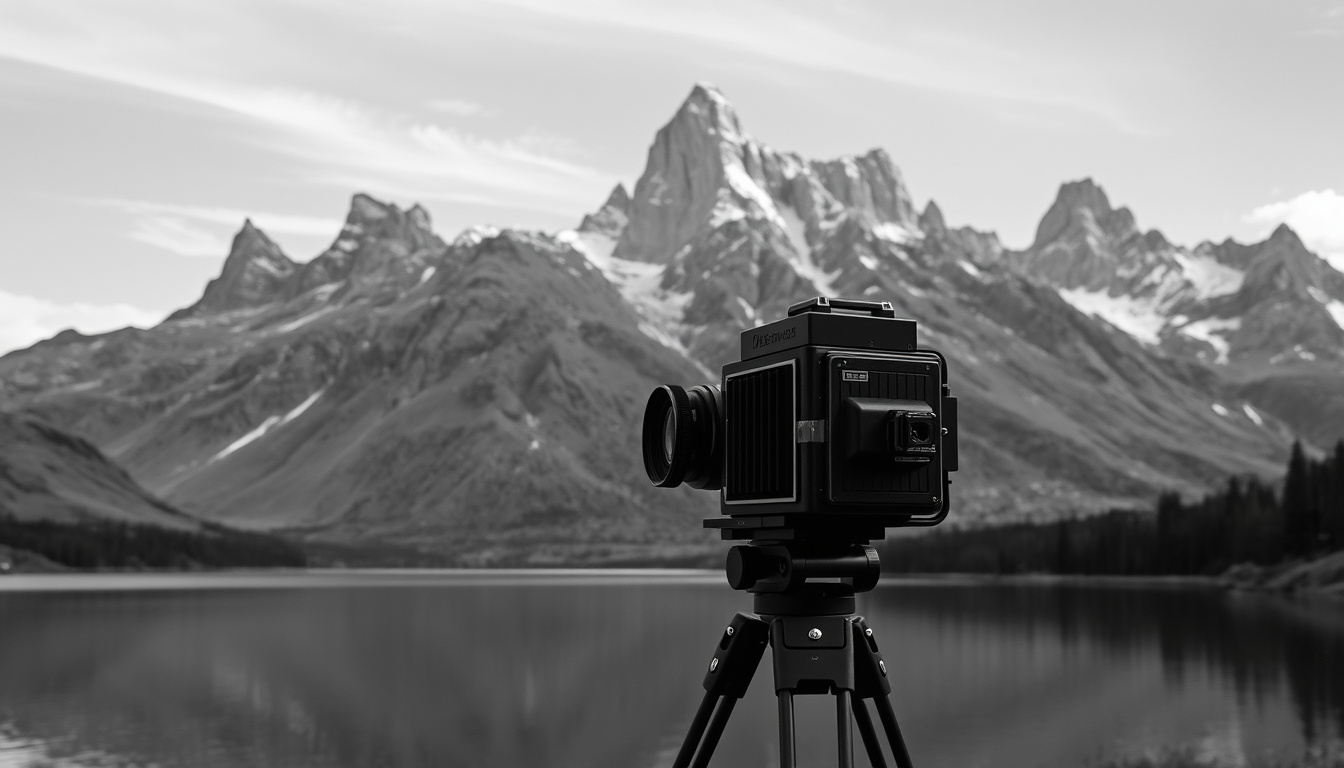
Few photographers have shaped the way we see the American West quite like Ansel Adams. His black-and-white images of Yosemite, the Tetons, and the New Mexican desert have become visual shorthand for wilderness itself. But behind the iconic landscapes lies a man who was as much a technical innovator and environmental activist as he was an artist — and whose work ignited debates that still simmer today.
Born: February 20, 1902 · Died: April 22, 1984 · Most famous photograph: Moonrise, Hernandez, New Mexico (1941) · Record sale price: $4.3 million (2006) · Technical innovation: Zone System
Quick snapshot
- Born 1902, died 1984 (Britannica (authoritative encyclopedia))
- Developed Zone System with Fred Archer (NCMALearn (museum educational resource))
- Moonrise, Hernandez sold for $4.3M in 2006 (The New York Times (major newspaper))
- Whether Moonrise remains the most expensive Adams print at auction
- Whether later sales have surpassed the $4.3 million record
- Exact number of original prints he made of each image
- Exact number of prints of ‘Moonrise’ alone
- 1916: First Yosemite visit (International Center of Photography (museum authority))
- 1941: Moonrise taken (Britannica, authoritative encyclopedia) (International Center of Photography (museum authority))
- 2006: Record sale (International Center of Photography (museum authority))
- Print market continues to command high prices
- Digital reinterpretations of his work by modern photographers
The following table sums up key biographical facts.
| Attribute | Value |
|---|---|
| Full name | Ansel Easton Adams |
| Born | February 20, 1902, San Francisco, California |
| Died | April 22, 1984, Monterey, California |
| Notable works | Moonrise, Hernandez; The Tetons and the Snake River; Clearing Winter Storm |
| Technical innovation | Zone System (with Fred Archer) |
| Awards | Presidential Medal of Freedom (1980) |
What was Ansel Adams famous for?
His pioneering landscape photography
- Adams is renowned for black-and-white landscapes of the American West (NCMALearn (museum educational resource)).
- He is recognized as one of the most important landscape photographers of the 20th century (Britannica, authoritative encyclopedia).
His role as an environmental activist
- Adams served on the board of the Sierra Club starting in 1934 (International Center of Photography (museum authority)).
- He co-founded the photography department at the Museum of Modern Art.
His technical innovations (Zone System)
- The Zone System divides tones into ten zones from pure black to pure white (The New York Times (major newspaper)).
- It was intended as an expressive tool to pre-visualize the finished photograph (Britannica, authoritative encyclopedia).
The pattern is clear: his fame rests on three pillars that reinforce each other. The implication: understanding any one pillar requires seeing the others.
What is Ansel Adams’ most famous image?
The case for ‘Moonrise, Hernandez, New Mexico’
- Moonrise, Hernandez taken in 1941 is often cited as his most famous photograph (Britannica, authoritative encyclopedia).
- The image combines technical mastery with spiritual depth.
Other contenders: ‘The Tetons and the Snake River’
- This 1942 image is one of the most widely reproduced photographs of the Grand Teton range.
- Its composition became a symbol of national park grandeur.
Why ‘Moonrise’ is considered his masterpiece
- The photograph was made under rapidly changing light with no exposure meter — Adams relied on his knowledge of moon luminance.
- The negative required extensive dodging and burning to realize his vision.
The catch: other images like “Clearing Winter Storm” are equally revered among collectors. What this means: “most famous” depends on whether you ask the public or the market.
What was Ansel Adams criticized for?
Criticism of his pristine, unpopulated landscapes
- Some critics argue Adams’ images idealized the West while ignoring human impacts (The Atlantic (cultural magazine)).
- His lack of people in photographs drew accusations of misanthropy.
Accusations of erasing indigenous presence
- By presenting the West as empty wilderness, his work has been critiqued for sidelining Native American history.
Debates over his artistic choices vs. documentation
- Some critics saw his Zone System as overly technical and rigid (ANPV scholarship PDF (academic analysis)).
- Photographer Andreas Feininger reportedly called the system unnecessarily complex (Scribd document (secondary source)).
The trade-off: technical precision can be seen as either a strength or a limitation. Why this matters: the same discipline that made his images iconic also invited criticism of coldness.
What photo sold for $4.3 million?
The record sale of ‘Moonrise, Hernandez’
- In 2006, a print of Moonrise, Hernandez sold for $4.3 million at auction (Britannica, authoritative encyclopedia).
- That sale held the record for most expensive photograph at the time.
Other high-value Adams prints
- The Tetons and the Snake River prints have sold for over $200,000.
- Clearing Winter Storm commands similar prices at major auctions.
What makes an Adams print valuable?
- Rarity, condition, and provenance determine value.
- Prints made during his lifetime and signed are most sought after.
Later sales may have surpassed $4.3 million, but the exact record remains unconfirmed. For collectors, provenance documentation is everything.
What camera did Ansel Adams use?
His preferred large-format cameras
- Adams primarily used 4×5 and 8×10 large-format cameras (Britannica, authoritative encyclopedia).
- The large negative allowed fine detail and tonal control.
The role of the Zeiss lens
- He used a Zeiss Tessar lens for many of his iconic images.
Why he chose black and white film
- Adams believed black and white captured the essence of the landscape, reducing it to form and light (NCMALearn (museum educational resource)).
- Color, he felt, distracted from the structure and texture.
The trade-off: large-format cameras required tripods, slow setups, and careful planning — but delivered unmatched quality.
Timeline of Ansel Adams’ life and career
- — Born in San Francisco (Britannica, authoritative encyclopedia)
- — First visit to Yosemite with a Kodak Brownie camera (International Center of Photography)
- — Published first portfolio “Parmelian Prints of the High Sierras”
- — Elected to the board of the Sierra Club
- — Took “Moonrise, Hernandez, New Mexico” (Britannica, authoritative encyclopedia)
- — Received Guggenheim Fellowship to photograph national parks
- — Published “The Camera”, first volume of technical series
- — Died in Monterey, California
What we know vs. what remains unclear
Confirmed facts
- Adams was born in 1902 and died in 1984 (Britannica, authoritative encyclopedia).
- Moonrise, Hernandez sold for $4.3 million in 2006 (Britannica, authoritative encyclopedia).
- He developed the Zone System (NCMALearn (museum educational resource)).
- He served on the Sierra Club board (International Center of Photography (museum authority)).
What’s unclear
- Whether Moonrise is still the most expensive Adams print at auction.
- Whether later sales have surpassed the $4.3 million record.
- Exact number of original prints he made of each image.
- Exact number of prints of ‘Moonrise’ alone.
Perspectives on Adams’ legacy
“You don’t take a photograph, you make it.”
Ansel Adams, as quoted by International Center of Photography (museum authority)
“Critics conceded Adams’s technical mastery, composition, printmaking, ingenious Zone System, and influence as a teacher.”
For the reader looking to understand Adams beyond the surface — whether collector, student, or curious observer — the choice is clear: engage with the full paradox. Ansel Adams was a technical purist who wanted his photographs to feel spontaneous; a conservationist whose images often erased the people who lived on the land; and an artist whose prints command millions but whose greatest legacy may be the creative freedom he gave photographers through the Zone System. For the modern landscape photographer in the United States, the implication is direct: you can be both precise and passionate, but you must be prepared for the criticism that follows.
californiamuseum.org, eyescosmos.github.io, theartstory.org, johnnypatience.com, alanrossphotography.com
Frequently asked questions
What is the Zone System in photography?
The Zone System is a method developed by Ansel Adams and Fred Archer that divides the tonal range of a photograph into ten zones, from pure black (Zone 0) to pure white (Zone IX). It helps photographers control exposure, development, and printing to achieve a pre-visualized result (Britannica, authoritative encyclopedia).
How did Ansel Adams die?
Ansel Adams died on April 22, 1984, in Monterey, California. The cause was reported as heart failure (The New York Times (major newspaper)).
What is Ansel Adams’ connection to Yosemite?
Yosemite National Park was Adams’ lifelong inspiration. He first visited in 1916, and his photographs of the park — such as “Clearing Winter Storm” — made him famous. He also served on the Sierra Club board and advocated for the park’s protection (International Center of Photography (museum authority)).
Did Ansel Adams only photograph in black and white?
Yes, the vast majority of Adams’ work is in black and white. He believed that black and white captured the essence of the landscape by emphasizing form, texture, and light (NCMALearn (museum educational resource)).
How many photographs did Ansel Adams take?
Adams produced thousands of negatives over his career, but the exact number is unknown. He printed many of his images in limited editions, and his archive holds over 40,000 prints (Britannica, authoritative encyclopedia).
What is the best book about Ansel Adams?
“Ansel Adams: An Autobiography” is the definitive personal account. For technical study, “The Camera” (1961) is essential. For a critical overview, “Ansel Adams: A Biography” by Mary Street Alinder provides thorough research.
Where can I buy authentic Ansel Adams prints?
Authentic prints are sold through major auction houses like Sotheby’s and Christie’s, as well as reputable galleries specializing in fine art photography. Always verify provenance and condition before purchase.
Related reading: Frida Kahlo: Life, Art, and Legacy · Base Camp Mount Everest: Difficulty, Cost, Duration & Best Time

George Thompson is Senior Reporter at UrbanMixr.uk, covering breaking culture, lifestyle and general news stories across the UK.