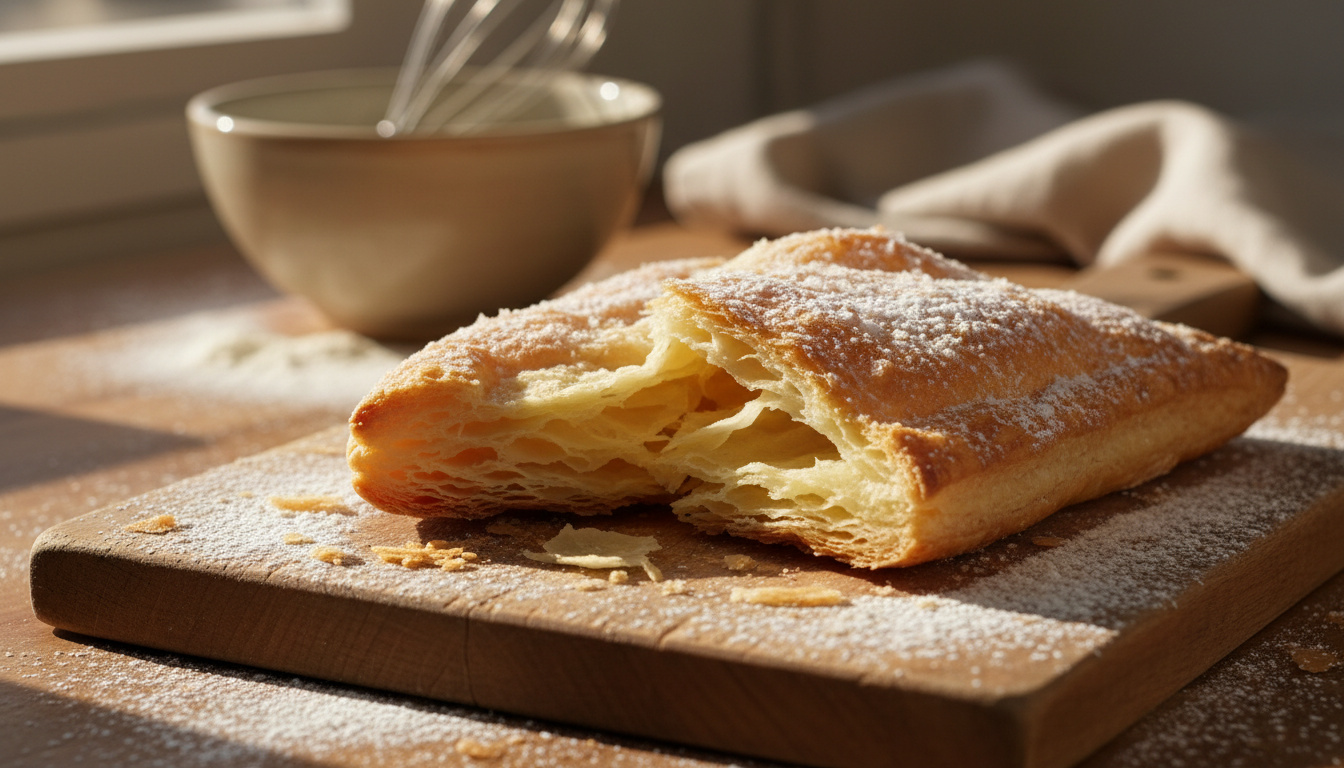

Puff pastry, known in professional kitchens as pâte feuilletée, represents the pinnacle of laminated dough craftsmanship. This delicate, flaky pastry emerges from the precise layering of butter between sheets of dough, creating hundreds of paper-thin strata that expand dramatically in the oven. While commercial versions line supermarket shelves, making puff pastry from scratch yields a texture and flavor unattainable through mass production.
The process demands patience and attention to temperature, but requires no specialized equipment beyond a rolling pin and refrigerator. Home bakers can choose from several methodologies ranging from the traditional European hand technique to rapid food processor approaches, each yielding distinct textural results. Understanding the fundamental mechanics of lamination transforms this seemingly intimidating recipe into a series of manageable, repetitive steps.
How to Make Puff Pastry Dough from Scratch
- Cold butter remains essential throughout the process; warmth destroys the lamination structure before baking begins
- Six single folds create 729 distinct layers, the traditional target for classic puff pastry
- Rest periods between folds prevent gluten resistance that causes dough to shrink during rolling
- Over-processing develops excess gluten, causing the dough to retract and resist shaping
- Visible butter pieces within the dough create the steam pockets responsible for the characteristic rise
- Bread flour produces a dough consistency closer to the butter layer, improving lamination adhesion
- Lemon juice adds pliability to butter, helping it stretch uniformly with the dough during folding
| Butter Ratio | 50% by weight (equal parts flour and butter) |
|---|---|
| Folds Required | 6 single or 3 double folds |
| Rest Between Folds | 20 minutes refrigerated |
| Total Active Time | 30-60 minutes |
| Final Yield | Approximately 1.5 pounds |
| Refrigerator Storage | Up to 3 days wrapped |
| Water Temperature | Ice-cold |
| Butter Temperature | Cold but pliable (varies by method) |
Essential Ingredients and Tools for Puff Pastry
What Ingredients Do You Need for Puff Pastry?
The foundation requires only four components: all-purpose or bread flour (typically 2-4 cups depending on batch size), cold butter (between 1¼ and 4½ cups cut into cubes), salt (¼ to 1 teaspoon), and ice-cold water (approximately ½ cup). Quality butter outperforms margarine or store-brand alternatives, as the fat content and water ratio directly affect steam production and final texture.
What Flour Is Best for Puff Pastry?
Both all-purpose and bread flour produce excellent results, though bread flour offers distinct advantages for traditional methods. The higher protein content in bread flour creates a dough closer in consistency to the butter layer, allowing the two components to stretch together during lamination rather than fighting against each other.
Can You Make Puff Pastry Without a Food Processor?
Absolutely. The rough puff method requires no machinery whatsoever, relying solely on fingertips to rub butter into flour. Traditional European techniques use the warmth of your hands to mash butter into a paste. Even the stand mixer approach, while mechanized, offers more control than the food processor method and eliminates the risk of over-processing that plagues high-speed blade systems.
High-quality European-style butter contains less water and higher fat content than standard supermarket brands. This composition creates superior steam lift during baking and produces the distinct, shattering flakiness that defines professional-grade puff pastry. The investment in premium butter yields measurable textural differences in the final product.
For those considering kitchen upgrades to support advanced baking projects, consult the B and Q Kitchens – 2025 Prices and Quality Guide to compare appliance specifications and workspace layouts suitable for pastry preparation.
Step-by-Step Folding Technique for Perfect Layers
How Many Times Do You Fold Puff Pastry?
Standard recipes require a minimum of two folding cycles, though six single folds represent the classical approach for achieving 729 layers. Some methods extend to eight folds for ultra-delicate pastry, but each additional fold increases the risk of over-working the dough. The key lies not in the maximum number of folds, but in consistent execution and adequate resting between each sequence.
The Complete Folding Method
Begin by rolling the chilled dough to approximately 12 inches by 24 inches on a lightly floured surface. Bring the right and left sides toward the middle until they meet at the center, then fold the dough in half by bringing the left side over the right. Rotate the folded dough 90 degrees, wrap in parchment paper, and refrigerate for 20 minutes before repeating the process.
Rotation ensures even gluten development in all directions. After the final fold, allow the dough to rest for at least 20 minutes before rolling for your specific recipe, or wrap tightly for storage. This resting period allows the butter to firm up again and the gluten to relax, preventing shrinkage during the final baking stage.
How to Store and Use Homemade Puff Pastry
How to Store Homemade Puff Pastry?
Keep the dough wrapped tightly in parchment paper or plastic wrap to prevent absorption of refrigerator odors and drying. The pastry maintains optimal workability for three days when refrigerated. Between each folding step during construction, maintain the 20-minute refrigeration protocol to preserve butter integrity.
Can Puff Pastry Be Frozen?
While specific freezing protocols receive limited documentation in available research, the emphasis on cold storage throughout the construction process suggests frozen storage extends viability significantly. Wrap completed dough tightly in multiple layers of plastic wrap followed by foil, then freeze flat to preserve shape. Thaw overnight in the refrigerator rather than at room temperature to prevent butter softening.
Common Mistakes to Avoid When Making Puff Pastry
Over-processing or over-mixing develops excess gluten, causing the dough to shrink back aggressively while rolling and lose its rectangular shape. Breaking down the butter too much eliminates the visible pieces essential for creating steam layers; the butter should remain distinct, not creamed into the flour.
Room-temperature ingredients destroy the lamination mechanism before baking begins. All components—butter, water, and dough—must remain cold throughout construction. Skipping rest periods between folds produces elastic, resistant dough that refuses to roll thin, while over-working by hand generates heat that softens the butter prematurely.
Warm kitchens and hot hands cause butter to absorb into the flour matrix, eliminating the distinct layers necessary for proper rising. If the dough becomes sticky or greasy at any point, stop immediately and refrigerate for 20 minutes before continuing. Working quickly and using a lightly floured pastry mat helps maintain the thermal balance.
Refrigeration between folds serves two purposes: it firms the butter to prevent absorption into the dough, and it relaxes developed gluten strands. Without these rest periods, the dough becomes increasingly resistant to rolling, eventually springing back so aggressively that proper lamination becomes impossible. For perfectly crisp oven-baked potato wedges, follow this guide: Sprø potetbåter i ovn
How Long Does It Take to Make Puff Pastry?
- Initial mixing: 10-15 minutes depending on method (food processor being fastest, traditional hand-mashing slowest)
- First rest: 20 minutes minimum refrigeration to chill the détrempe (base dough)
- Butter block preparation: 5-20 minutes (varies by technique from simple cutting to mashing into paste)
- First fold and rest: Rolling 5 minutes plus 20 minutes chilling
- Second fold and rest: Rolling 5 minutes plus 20 minutes chilling
- Third through sixth folds: Each requires 5 minutes rolling plus 20 minutes chilling
- Final rest before use: 20-30 minutes to ensure butter remains cold during final rolling
The total timeline spans four to six hours, though active working time comprises less than one hour. The majority involves passive refrigeration that allows the physical structure to develop properly.
What We Know for Certain About Puff Pastry
| Established Information | Information That Remains Unclear |
|---|---|
| Cold ingredients are essential for maintaining butter integrity and creating steam layers | Exact optimal room temperature for working with dough (varies significantly by kitchen environment and humidity) |
| Six single folds create 729 distinct layers through geometric multiplication | Maximum safe freezing duration for homemade dough (sources emphasize cold storage importance but lack specific freezer timeline documentation) |
| Resting 20 minutes between folds prevents gluten resistance and maintains workability | Precise thickness measurements for initial butter block placement in all methodological variations |
| High-quality butter outperforms margarine in steam production and final texture | Whether all-purpose or bread flour produces objectively superior results across all home oven types and baking applications |
How Does Puff Pastry Differ from Croissant Dough?
The primary distinction lies in leavening. Puff pastry requires no yeast, relying entirely on steam generated from butter water content to create lift. Croissant dough incorporates yeast as a biological leavening agent in addition to steam lift, creating a different internal structure and flavor profile.
Additionally, rough puff pastry—the simplified home method—requires no separate lamination with a distinct butter layer. Traditional puff pastry and croissants both involve complex encasement of a butter block within the dough, but croissant dough undergoes fermentation that puff pastry avoids. This absence of yeast makes puff pastry more predictable for beginners, as the baker controls the rise entirely through mechanical lamination rather than biological activity.
Expert Perspectives on Puff Pastry
Use high-quality butter rather than margarine or store-brand options, as butter quality directly affects the final texture.
— An Italian in My Kitchen
Do not use a food processor, pastry cutter, or mixer for this step, as they over-break the butter. Visible butter pieces are essential for creating layers.
— Sally’s Baking Addiction
Over-processing or over-mixing develops excess gluten, causing the dough to shrink back while rolling. Keep movements brief and gentle.
— Sense and Edibility
Mastering the Art of Puff Pastry
Creating laminated dough at home demands respect for temperature and timing, but rewards the baker with unparalleled flakiness suitable for both savory applications and sweet confections. Whether executing the rapid food processor method or the meditative traditional hand technique, success follows from maintaining the integrity of the butter layers throughout construction. For those exploring cultural destinations after perfecting their technique, the V&A Museum London – Complete Visitor Guide offers inspiration from historical culinary arts and decorative craftsmanship.
Frequently Asked Questions
Can puff pastry be made in advance?
Yes. Complete all folds, wrap the dough tightly in plastic wrap, and refrigerate for up to three days. For longer storage, freeze the dough and thaw overnight in the refrigerator before rolling.
Why does puff pastry require cold butter?
Cold butter remains distinct from the dough during lamination. In the oven, water content in the butter converts to steam, forcing the layers apart. Warm butter absorbs into the flour, eliminating the steam pockets necessary for rise.
What is the butter block method?
In the stand mixer approach, you prepare a separate butter block by mixing four sticks of butter with flour until pliable. This encased layer creates the distinct strata when folded into the dough, different from methods where butter is cut into the flour directly.
Is lemon juice necessary for puff pastry?
No, but it adds pliability to the butter in traditional European methods, helping the butter layer stretch uniformly with the dough during rolling and folding without cracking or breaking.
How do I know if I’ve overworked the dough?
Overworked dough feels elastic and springs back when rolled. It may shrink during baking. If the dough resists stretching or becomes warm and sticky, refrigerate immediately to halt gluten development.
Can I use a pastry cutter instead of my hands for rough puff?
No. Food processors, pastry cutters, and mixers over-break the butter. For rough puff, briefly rub the butter into the flour with your fingertips only, leaving visible pea-sized pieces essential for layering.
What happens if I skip the resting periods?
Without refrigeration between folds, butter softens and bleeds into the dough. Additionally, developed gluten causes the dough to shrink back during rolling, making it impossible to maintain the rectangular shape needed for proper lamination.

Sophie Larkin is Culture & Events Editor at UrbanMixr.uk, covering UK culture, events, festivals, arts and pop culture.