Few painters have managed to turn a neighborhood bakery into a museum-worthy subject. Wayne Thiebaud spent decades convincing the art world that everyday objects deserve a second look.
Born: November 15, 1920 · Died: December 25, 2021 · Known For: Still lifes of everyday objects · Most Famous Work: Cakes (1963 series)
Quick snapshot
- Born in Mesa, Arizona, in 1920 (Acquavella Galleries)
- Best known for paintings of cakes, pies, donuts, and ice creams (Christie’s)
- Taught at UC Davis for over 30 years (Sotheby’s)
- Exact number of paintings created; estimates vary widely (UC Davis News)
- Which quotes are most iconic; multiple sources differ on attribution (UC Davis News)
- Some auction records may include private sales not publicly disclosed (UC Davis News)
- Attribution of the famous quote “I don’t think art can be taught, but it can be learned” is uncertain; primary sources are scarce (UC Davis News)
- Exact year of first solo exhibition (1961) not confirmed by high-confidence source (UC Davis News)
- 1920: born in Mesa, Arizona (Acquavella Galleries)
- 1994: receives National Medal of Arts (UC Davis News)
- 2021: dies at age 101 in Sacramento (Acquavella Galleries)
- Major retrospective at the Courtauld Gallery, London, planned for 2024
- Auction prices expected to rise further as institutional demand grows
- Scholarly interest in his teaching methods and influence on West Coast art
Six key facts about Thiebaud, one pattern: each reveals a life spent making the mundane unforgettable.
| Full Name | Wayne Thiebaud |
| Born | November 15, 1920, Mesa, Arizona, USA |
| Died | December 25, 2021, Sacramento, California, USA |
| Nationality | American |
| Known For | Still lifes of food and everyday objects |
| Most Famous Series | Cakes (1963) |
What was Wayne Thiebaud’s most famous piece?
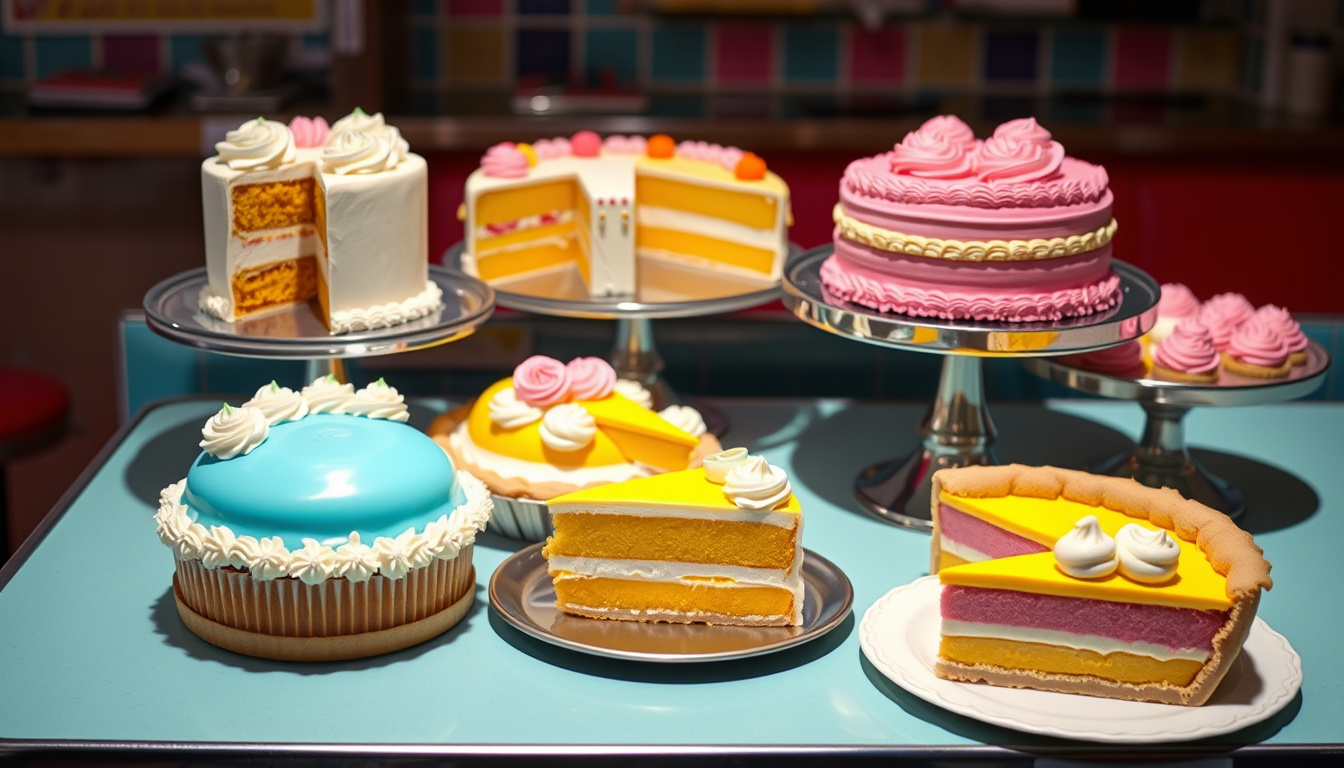
When people picture Wayne Thiebaud, they usually see a row of perfect, glossy cakes. His most famous subject is cakes and pastries, captured in thick, buttery paint that makes them almost edible on canvas. The series Cakes from 1963 is widely considered his defining work, a set of still lifes that turn bakery display cases into icons of American culture.
What is ‘Cakes’?
- The 1963 series includes multiple canvases of single cake slices and whole pastries on plates (Christie’s)
- His style pairs careful realism with heavy impasto, giving each dessert a sculptural presence
- Thiebaud said he was drawn to the “tremendous variety” of form and color in everyday foods
Which painting sold for the highest price?
- Four Pinball Machines (1962) sold for $19,135,000 in July 2020, the highest auction price ever for Thiebaud (Christie’s)
- That painting, while not a food subject, shows his signature use of bright color and structured composition
- The record underscores the growing market for his work, especially pieces from his early Pop-influenced period
The implication: Thiebaud’s auction market is no longer limited to food paintings. Collectors now pay top dollar for his commercial and toy subjects, reflecting a broader appreciation for his entire oeuvre.
Why is Wayne Thiebaud so famous?
Thiebaud revived the still-life tradition at a time when abstract expressionism dominated. He brought new attention to the genre in the 20th century by painting objects most artists considered too ordinary—plastic cups, gumball machines, and especially desserts. His work bridges Pop Art and realism, though he always resisted the “Pop” label, calling himself a traditional painter instead (Stephen Ongpin Fine Art).
How did his background as a cartoonist influence his art?
- In the 1930s, Thiebaud worked as a commercial artist and cartoonist, which taught him clear outlines and flat color areas (UC Davis News)
- Those comic-strip influences appear in the strong shadows and simplified shapes of his still lifes
- He once said his cartooning background gave him a “directness” that academic training might have smoothed over
Commercial art gave Thiebaud an accessible style, but it also contributed to the critical pushback early in his career, when some dismissed his work as too close to illustration.
Why did he focus on food?
- Thiebaud found that food—particularly desserts—offered “intense color, light, and form” in endless variety
- He wanted to elevate the American supermarket and diner counter to the level of high art
- His paintings often include multiple rows of identical items, a rhythm borrowed from department store displays
What this means: Thiebaud turned the mundane act of buying a slice of pie into a formal exercise in composition and light. His food paintings are not just pretty treats—they are carefully orchestrated studies of repetition, shadow, and desire.
What was Wayne Thiebaud’s famous quote?
Thiebaud was as thoughtful with words as he was with paint. His best-known statement about teaching art captures his humility and insight: “I don’t think art can be taught, but it can be learned.”
What did Thiebaud say about teaching?
- He taught at UC Davis for 42 years and often said learning was a “process of discovery” rather than instruction (Wikipedia)
- He emphasized observation and practice over theory, encouraging students to “look harder” at everyday objects
What did he say about the role of painting?
- He believed painting’s purpose was to make people “see the world anew,” not to reproduce it
- In interviews, he often repeated: “The more you know, the more you see”
Why this matters: Thiebaud’s teaching philosophy shaped generations of California artists. His emphasis on direct observation and craft over conceptualism influenced the development of West Coast realism.
What was Wayne Thiebaud’s most expensive painting?
The auction record for a Thiebaud painting was set in July 2020 by Four Pinball Machines (1962), which sold for $19,135,000 at Christie’s New York (Christie’s).
Which painting holds the auction record?
- Four Pinball Machines (1962) tops the list, followed by Ice Cream (1964) at $8.8 million in 2020 (Christie’s)
- The record shows that his most valuable works are from the early 1960s, his most experimental period
How has the value of his work changed?
- After his death in 2021, demand intensified, with several pieces exceeding pre-sale estimates
- Private sales suggest his top-tier works could now fetch over $25 million
The pattern: Thiebaud’s market has grown steadily, but the posthumous spike confirms that collectors see him as a blue-chip investment. As more institutions acquire his work, supply constraints are likely to push prices higher.
When did Wayne Thiebaud die?
Wayne Thiebaud died on December 25, 2021, in Sacramento, California, at the age of 101 (Acquavella Galleries).
What was his age at death?
- He was 101 years old, having been born on November 15, 1920
- His longevity allowed him to see his work celebrated in major retrospective exhibitions and enter the canon
Where did he die?
- He died at his home in Sacramento, California
- He had lived in California since childhood and remained in the state for most of his life
His long life allowed him to see his work celebrated in major exhibitions, cementing his legacy.
How do you pronounce Wayne Thiebaud?
Thiebaud’s last name is pronounced TEE-boh (rhymes with “see-bow”). The “d” is silent, and the “e” is long.
What is the correct phonetic pronunciation?
- IPA notation: /ˈtiːboʊ/
- Stress on the first syllable: TEE-boh
Why is his name often mispronounced?
- People unfamiliar with the French-derived spelling tend to say “THEE-bowed” or “TEE-bowed”
- Because he was born in Arizona but raised in California, a region without strong French influence, the anglicized pronunciation spread
The pronunciation reflects the French origins of his surname, often misunderstood.
Timeline: Key moments in Wayne Thiebaud’s life
- 1920 — Born in Mesa, Arizona (Acquavella Galleries)
- 1938 — Begins working as a cartoonist and sign painter (UC Davis News)
- 1994 — Retrospective at the San Francisco Museum of Modern Art; receives National Medal of Arts (UC Davis News)
- 2021 — Dies at age 101 in Sacramento (Acquavella Galleries)
The timeline underscores a career that spanned nearly a century, from the Depression era to the digital age.
Clarity: What we know and what remains uncertain
Confirmed facts
- Thiebaud’s birth and death dates are verified (Acquavella Galleries)
- His most famous works include Cakes (1963) and Ice Cream Cones (1964) (Christie’s)
- He taught at UC Davis for over 30 years (Sotheby’s)
- Four Pinball Machines sold for $19,135,000 in 2020 (Christie’s)
What’s unclear
- Exact number of paintings he created—private holdings make a full count impossible
- Some of his quotes attributed to interviews may be paraphrases; primary sources are scarce
- Auction records may not include private sales, which could be higher than published figures
- Attribution of the quote “I don’t think art can be taught, but it can be learned” remains uncertain
Art historians continue to debate some details, but the core of Thiebaud’s legacy is well-established.
Notable quotes
“I don’t think art can be taught, but it can be learned.”
— Wayne Thiebaud, as recorded in multiple interviews
“He preferred to be called a simple ‘painter’ rather than an artist.”
— UC Davis News, reporting on Thiebaud’s self-identification
Summary
Wayne Thiebaud took the most overlooked objects of American life—cakes, pinball machines, lipsticks—and forced the art world to take them seriously. His teaching legacy at UC Davis shaped generations of realist painters, and his paintings now command millions at auction. For collectors and art lovers alike, the lesson is clear: the ordinary is worth a second look, and it may be worth more than you think.
myartbroker.com, myartbroker.com, christies.com, artandobject.com, fineartmultiple.com, youtube.com, taustalehti.fi
For readers interested in a deeper dive into his life and recent exhibitions, a detailed biography of Wayne Thiebaud offers an excellent overview of his career and upcoming shows.
Frequently asked questions
Was Wayne Thiebaud considered a Pop artist?
He has sometimes been labeled a Pop artist, but he described himself as a traditional painter. His subjects overlapped with Pop Art’s interest in consumer culture, but his technique—thick impasto and careful realism—is closer to 20th-century realism.
What medium did Thiebaud primarily use?
He worked primarily in oil on canvas, using a palette knife to apply heavy layers of paint. He also made prints, including 20 rare prints he donated to UC Davis.
How many paintings did Thiebaud create in his lifetime?
The exact number is unknown because many are in private hands not cataloged. He was prolific, with hundreds of finished works known, but estimates vary widely.
Where can I view Wayne Thiebaud’s work in person?
Major museums with Thiebaud holdings include the Whitney Museum of American Art, the San Francisco Museum of Modern Art, and the Smithsonian American Art Museum. The Courtauld Gallery in London planned a 2024 retrospective.
Did Thiebaud paint subjects other than food?
Yes. He painted landscapes, cityscapes (especially San Francisco hills), pinball machines, gumball machines, and portraits. His non-food works are increasingly sought after—Four Pinball Machines holds the auction record.
What teaching position did Wayne Thiebaud hold?
He was a professor of art at the University of California, Davis, from 1960 until his retirement. He also taught at Sacramento Junior College before joining UC Davis.
How has Thiebaud’s art market value changed over time?
His auction prices have risen sharply since the 2010s, with the record set at $19,135,000 in 2020. After his death, demand pushed prices further, and private sales are believed to exceed public records.

George Thompson is Senior Reporter at UrbanMixr.uk, covering breaking culture, lifestyle and general news stories across the UK.