
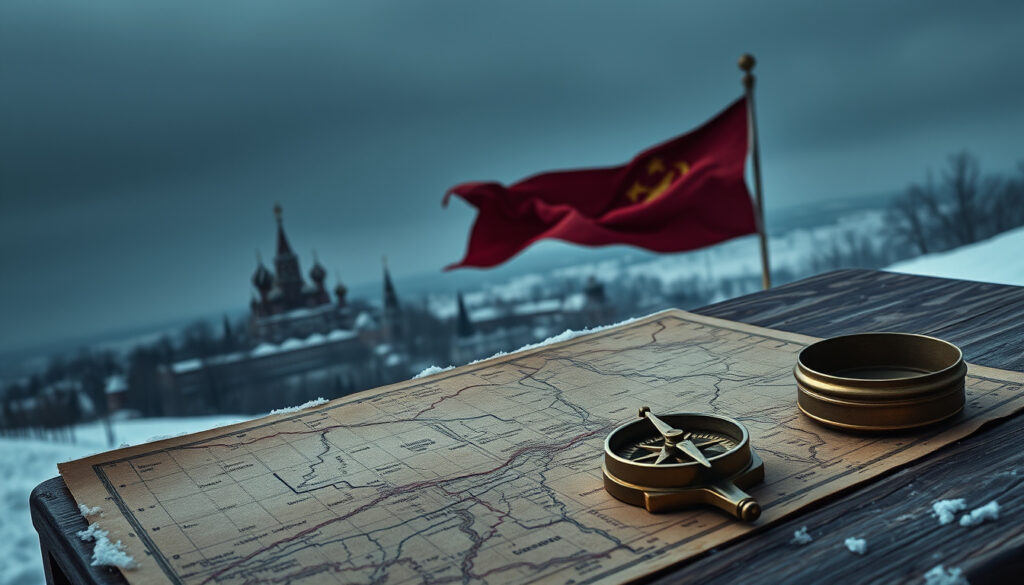
Few historical figures stir such a mix of dread, fascination, and grudging respect as Joseph Stalin. The Soviet leader who transformed a backward nation into a world superpower also left millions dead through policies that remain fiercely debated.
Born: 18 December 1878 (Gori, Georgia) ·
Died: 5 March 1953 (Moscow, USSR) ·
Cause of death: Stroke (official) ·
Years in power: 1924–1953 ·
Height: 1.68 m (5 ft 6 in) ·
Known for: Leader of Soviet Union during WWII and Cold War; purges and industrialization
Quick snapshot
- Stalin became General Secretary in 1922 (Wikipedia – Joseph Stalin biography)
- He led the Soviet Union during WWII (Wikipedia – Joseph Stalin)
- Died 5 March 1953 from a stroke (Wikipedia – Death and state funeral)
- Exact number of deaths caused by Stalin’s policies remains disputed
- Exact crowd crush casualty count at his funeral (estimates vary)
- Whether Stalin was poisoned or died naturally is still questioned
- 30 April 1945 – Hitler dies; Stalin orders verification (Wikipedia – Death of Hitler)
- 5 March 1953 – Stalin’s death triggers massive crowd crush (Wikipedia – Death of Hitler)
- Historians continue debating Stalin’s net impact on Soviet development
- Declassification of Soviet archives may clarify funeral casualty numbers
The table below summarizes the basic facts of Stalin’s identity and rule.
| Label | Value |
|---|---|
| Full name | Joseph Vissarionovich Stalin (born Dzhugashvili) |
| Title | General Secretary of the Communist Party of the Soviet Union |
| Years in power | 1922–1953 |
| Role in WWII | Supreme Commander of Soviet Armed Forces |
| Cause of death | Stroke (officially); some suspicion of poison |
| Notable policy | Five-Year Plans, collectivization, purges |
The implication: Stalin’s biography is a study in contradictions — absolute power delivered through inhuman means.
Why is Joseph Stalin so famous?
Stalin’s role in World War II
- Stalin led the USSR to victory over Nazi Germany (Wikipedia – Joseph Stalin)
- The Soviet war effort cost over 20 million lives but broke the Wehrmacht
Industrialization under Stalin
Through a series of Five-Year Plans, Stalin forced a largely agrarian society into a modern industrial power. The First Five-Year Plan (Wikipedia – Five-Year Plans) set breakneck targets for steel, coal, and machinery. Production tripled in some sectors, but at a staggering human cost.
The Great Purge and terror
- From 1936 to 1938, Stalin orchestrated mass arrests and executions of perceived enemies (Wikipedia – Great Purge)
- Estimates of deaths range from 600,000 to over 1.5 million
Stalin’s terror eliminated internal opposition but also decimated the Red Army officer corps, nearly costing the USSR the war in 1941.
The pattern: each of Stalin’s famous achievements came with a human cost that continues to shape his contested legacy.
How did Stalin react to Hitler’s death?
Soviet intelligence on Hitler’s suicide
Stalin was informed of Adolf Hitler’s suicide on 1 May 1945, just hours after the event (Wikipedia – Death of Adolf Hitler). German officer Hans Krebs delivered the message to Soviet forces during surrender negotiations (Sputnik Globe – how Stalin learned).
Stalin’s order to capture Hitler alive
- Stalin immediately demanded proof and ordered SMERSH to find the corpse (Wikipedia – Death of Hitler)
- His reported reaction: “Pity we couldn’t take him alive” (TheCollector – reactions to Hitler’s death) — though the quote’s authenticity is uncertain
Post-war disinformation about Hitler’s death
At the Potsdam Conference in July 1945, Stalin reportedly claimed Hitler was living “in Spain or Argentina,” sowing doubt (Wikipedia – The Death of Hitler). The Soviet public received no immediate official celebration; the regime treated Hitler’s death as an intelligence problem, not a propaganda victory (TheCollector – Soviet messaging).
The pattern: Stalin treated Hitler’s death as a tactical puzzle, not a moment for public celebration, revealing his deep distrust and strategic mindset.
Why was Stalin so powerful?
Control of the Communist Party
As General Secretary from 1922, Stalin placed loyalists in key posts and slowly sidelined rivals like Trotsky, Zinoviev, and Kamenev (Wikipedia – Joseph Stalin). By the late 1920s, he held uncontested authority.
Secret police and terror apparatus
- The NKVD operated as Stalin’s personal weapon, enforcing loyalty through surveillance, arrests, and executions (Wikipedia – Great Purge)
- During the Great Purge, Stalin eliminated nearly every potential challenger
Cult of personality
Stalin cultivated a myth as the “Man of Steel” – invincible, wise, and all-knowing. Propaganda portrayed him as the father of the nation, and his image appeared everywhere (TheCollector – Stalin cult). This cult proved so powerful that even after his death, millions mourned sincerely.
What this means: Stalin’s power was engineered, not inherited — a deliberate construction of control mechanisms that survived his death.
What was Hitler’s opinion of Stalin?
Ideological conflict between Nazism and Communism
- Hitler viewed communism as a Jewish-Bolshevik conspiracy and Stalin as its chief proponent (Wikipedia – Mein Kampf)
- The two ideologies were diametrically opposed on race, class, and state
Hitler’s tactical respect for Stalin
Despite his hatred, Hitler privately acknowledged Stalin’s political cunning. In conversations with aides, Hitler said Stalin “has a certain Asiatic cunning” and is “one of the most extraordinary figures in history” (TheCollector – Hitler on Stalin).
Mutual distrust and the Molotov–Ribbentrop Pact
- The non-aggression pact of August 1939 was a temporary alliance of convenience (Wikipedia – Molotov–Ribbentrop Pact)
- Hitler broke it in 1941 with Operation Barbarossa, showing he never trusted Stalin
The catch: both dictators saw each other as useful tools before inevitable betrayal — a pattern that defined twentieth-century totalitarian diplomacy.
How many people died at Stalin’s funeral?
Stampede at Stalin’s funeral in Moscow
On 9 March 1953, hundreds of thousands gathered at the House of Unions to pay respects. A crowd surge crushed many against barriers and stairwells. The exact toll remains disputed.
Official casualty reports
The Soviet government never released precise numbers. Western estimates at the time suggested between 300 and 500 deaths (The Conservative Woman – funeral stampede).
Historical estimates
- Some historians believe the death toll was intentionally suppressed to avoid embarrassing the regime
- Modern scholarship places the number at over 500, though no consensus exists
The implication: even in death, Stalin’s legacy of control produced chaos, and the true human cost remains hidden by the very system he built.
Did Stalin support LGBTQ?
Soviet policy on homosexuality under Stalin
Before Stalin’s consolidation of power, the Soviet Union had decriminalized homosexuality in 1917. Stalin reversed this: in 1934, male homosexuality was made a criminal offense punishable by up to five years in prison (Wikipedia – LGBT rights in the USSR).
Criminalization of male homosexuality in 1934
- Article 121 of the Soviet penal code targeted gay men
- Lesbianism was not explicitly criminalized but fell under broader “social disorder” penalties
Broader context of social conservatism
Stalin promoted traditional family values and condemned “bourgeois decadence.” The purges also targeted suspected homosexuals, who were often sent to the Gulag. This policy remained in effect for decades after his death.
Stalin’s anti-LGBTQ turn shows how revolutionary tolerance quickly gave way to authoritarian social control, a pattern repeated in other post-revolutionary regimes.
The pattern: Stalin used morality as another lever of power, reversing earlier Soviet progress to enforce social conformity.
Confirmed facts
- Stalin became General Secretary in 1922 (Wikipedia – Joseph Stalin)
- He led the USSR in WWII (Wikipedia – Joseph Stalin)
- Died 5 March 1953 (Wikipedia – Death and state funeral)
- Male homosexuality recriminalized in 1934 (Wikipedia – LGBT rights in the USSR)
- Ordered verification of Hitler’s death (Wikipedia – Death of Hitler)
What’s unclear
- Exact number of deaths caused by Stalin’s policies
- Exact funeral stampede death toll
- Whether Stalin was poisoned
- Authenticity of the “Pity we couldn’t take him alive” quote
“He was in full control of the war – I mean by that, he was the master of the battlefield.”
— Winston Churchill, on Stalin’s wartime role (Churchill Museum)
“Stalin built his terrible power on the cult of his own personality. He used the secret police to crush any opposition.”
— Nikita Khrushchev, Secret Speech, 1956 (Wikipedia – Khrushchev’s secret speech)
“Stalin is a ruthless man – one of the most extraordinary figures in history.”
— Adolf Hitler, private remarks (TheCollector – Hitler on Stalin)
“The number of deaths directly attributable to Stalin’s rule is probably in the tens of millions – higher than any previous estimate.”
— Historian Robert Conquest, in The Great Terror (Wikipedia – The Great Terror)
Timeline: Key moments in Stalin’s life
- 18 December 1878 – Born in Gori, Georgia
- 1912 – Appointed to Bolshevik Central Committee
- 1922 – Became General Secretary
- 1928–1933 – First Five-Year Plan and forced collectivization
- 1936–1938 – Great Purge
- 23 August 1939 – Signed Molotov–Ribbentrop Pact
- 22 June 1941 – Germany invades USSR
- 30 April 1945 – Hitler’s death; Stalin orders capture (Wikipedia – Death of Hitler)
- July–August 1945 – Potsdam Conference
- 5 March 1953 – Dies in Moscow; funeral stampede
The implication: Stalin’s trajectory from an impoverished Georgian seminarian to totalitarian leader spanned only three decades.
Related on this site: Unity Mitford: The Truth About Her Life, Death, and Myths
en.wikipedia.org, ww2today.com, youtube.com, youtube.com, youtube.com, en.wikipedia.org, youtube.com, produktionstorget.se
A comprehensive look at his life and impact is available in Joseph Stalins biography and legacy.
Frequently asked questions
What was Stalin’s role in World War II?
Stalin was the Supreme Commander of Soviet Armed Forces, directing the military and political strategy that ultimately defeated Nazi Germany. He attended the Tehran, Yalta, and Potsdam conferences.
How did Stalin rise to power?
After Lenin’s death, Stalin used his position as General Secretary to appoint loyalists and outmaneuver rivals such as Trotsky, Zinoviev, and Bukharin, becoming the sole dictator by the late 1920s.
What were the Five-Year Plans?
A series of centrally planned economic initiatives aimed at rapid industrialization. They dramatically increased output but caused widespread famine and labor exploitation.
What is the Great Purge?
A campaign of political repression from 1936 to 1938 where Stalin targeted alleged enemies, resulting in hundreds of thousands of executions and millions sent to Gulags.
How did Stalin die?
Officially from a cerebral hemorrhage (stroke) on 5 March 1953. Some later theories suggest he may have been poisoned by associates, but no conclusive evidence supports this.
What is Stalin’s legacy today?
Stalin remains a deeply divisive figure: credited with industrializing the USSR and leading it to victory in WWII, but condemned for mass repression, the Great Purge, and the Holodomor famine.
How many people died under Stalin?
Estimates range from 6 million to over 20 million, encompassing victims of famine, purges, labor camps, and wartime deaths. Exact figures remain contested.
How did Stalin react to the news of Hitler’s death?
Stalin reacted with skepticism and demanded forensic confirmation from SMERSH. He did not publicly celebrate and instead treated the event as an intelligence and propaganda problem.
Stalin’s presence still haunts the modern era. For Russia and the former Soviet republics, the choice is clear: reckon honestly with the terror, or let the cult of the strongman continue to shape the future. For Western historians, the challenge remains to document the full human cost without losing sight of the geopolitical context that made Stalin’s rise possible.
George Thompson is Senior Reporter at UrbanMixr.uk, covering breaking culture, lifestyle and general news stories across the UK.