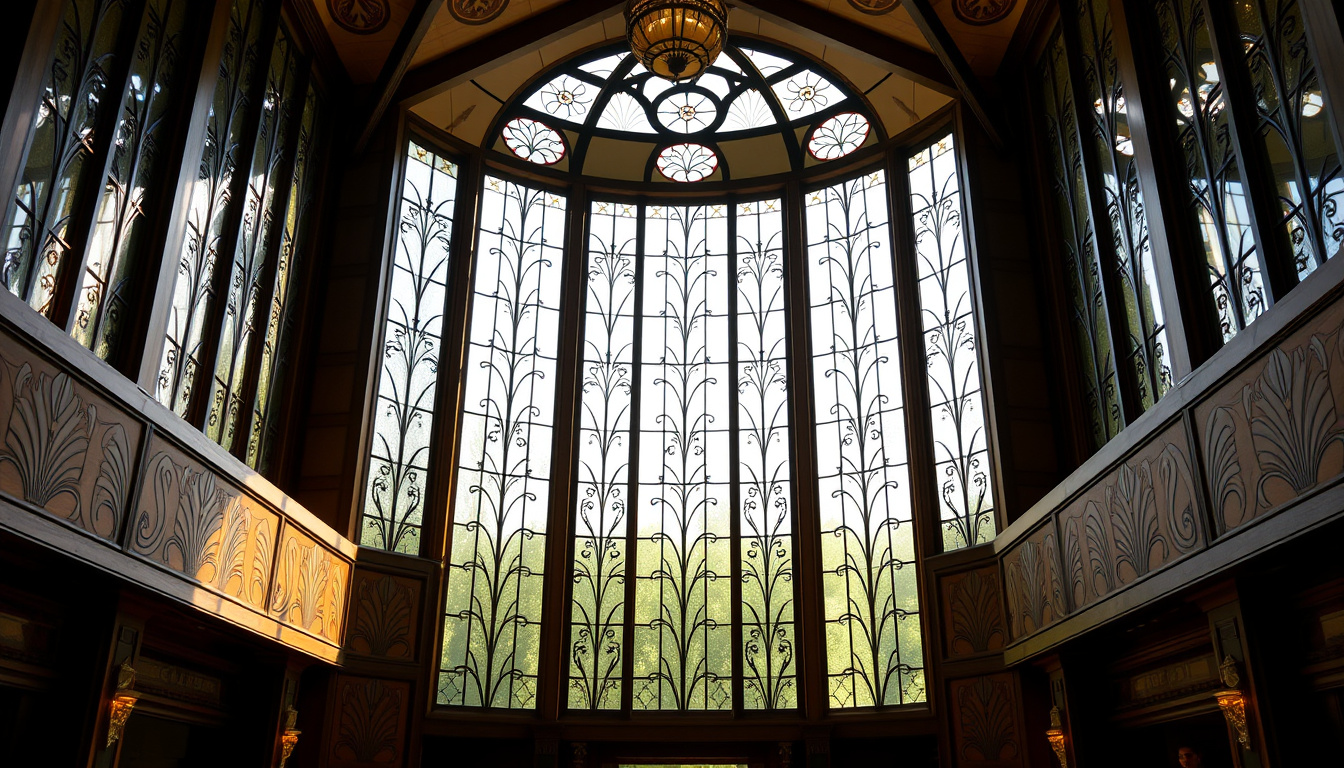
You probably know Charles Rennie Mackintosh’s work even if you don’t know his name—that impossibly elegant high-backed chair, the stylised rose, or the bold Glasgow School of Art building that seems to defy its Victorian surroundings. Born in Glasgow on 7 June 1868, Mackintosh carved out a singular path in architecture and design, creating a distinctly Scottish version of Art Nouveau that still feels fresh today. This article unpacks his key works, his partnership with his wife Margaret MacDonald, and why his reputation endures—even if it’s sometimes confused with a raincoat.
Born: 7 June 1868, Glasgow, Scotland ·
Died: 10 December 1928, London, England ·
Known for: Architecture, design, watercolour ·
Movement: Art Nouveau, Glasgow Style ·
Famous building: Glasgow School of Art
Quick snapshot
- Born 7 June 1868 in Glasgow, Scotland (Tate (UK national collection))
- Married Margaret MacDonald in 1900 (Charles Rennie Mackintosh Society (registered charity))
- Designed the Glasgow School of Art (National Galleries of Scotland (national institution))
- Died 10 December 1928 in London (Tate (UK national collection))
- Whether he ever visited Vienna after his 1900 exhibition there
- The exact number of watercolours he produced in his lifetime
- 1868: Born in Glasgow
- 1896: Won competition to design Glasgow School of Art
- 1900: Married Margaret MacDonald
- 1900–1910: Peak architectural output (Hill House, Willow Tea Rooms)
- 1923–1927: Painted watercolours in France
- 1928: Died in London
- His archive is preserved as a Recognised Collection of National Significance at Glasgow School of Art (GSA Archives & Collections (educational institution))
- Ongoing restoration of the Glasgow School of Art after the 2014 and 2018 fires (GSA Archives & Collections (educational institution))
Seven facts, one pattern: Mackintosh’s life and work are unusually well-documented for a turn-of-the-century artist, with institutional sources providing near-complete certainty on the big milestones.
The table below summarises Mackintosh’s core details for quick reference.
| Category | Detail |
|---|---|
| Full Name | Charles Rennie Mackintosh |
| Born | 7 June 1868, Glasgow, Scotland |
| Died | 10 December 1928, London, England |
| Movement | Art Nouveau, Glasgow Style |
| Known for | Architecture, design, watercolour painting |
| Spouse | Margaret MacDonald (married 1900) |
| Famous Work | Glasgow School of Art |
What is Charles Rennie Mackintosh’s most famous design?
Mackintosh’s reputation rests on a single building: the Glasgow School of Art. Completed in two phases between 1897 and 1909, it is widely considered his masterpiece. National Galleries of Scotland (national institution) calls it “one of his best-known works.” The building’s asymmetrical facade, large studio windows, and wrought-iron details broke sharply with the heavy revival styles favoured by Victorian architects.
The Glasgow School of Art
- The east wing was completed first (1897–1899); the west wing, including the famous library, followed (1907–1909).
- The library interior was a tour-de-force of Mackintosh’s total design philosophy: timber, light, and geometric pattern working as one.
The Mackintosh House
- This is the reconstructed home of Mackintosh and his wife Margaret MacDonald, rebuilt inside the Hunterian Art Gallery in Glasgow. It showcases their collaborative interior design.
- Original furniture and decorative pieces are displayed exactly as they were arranged in their Glasgow flat at 78 Southpark Avenue.
Hill House, Helensburgh
- Commissioned by publisher Walter Blackie in 1902, Hill House is Mackintosh’s most complete domestic work. Charles Rennie Mackintosh Society (registered charity) lists it among his iconic commissions.
- The house includes furniture, textiles, and light fittings designed by Mackintosh and his circle.
The implication: Each of these designs represents Mackintosh’s belief that a building should be an artwork, inside and out. The Glasgow School of Art remains the most influential, studied by architects worldwide.
Mackintosh didn’t just design buildings – he conceived every detail inside them, from furniture to light fittings. This holistic approach, shared with Margaret MacDonald, gave interiors a unity rare in Victorian Britain.
Why is Charles Rennie Mackintosh important?
Mackintosh is a central figure in the British Art Nouveau movement and the leading force behind the Glasgow Style, a Scottish variant of European Art Nouveau that emphasised geometric forms over sinuous curves. Frist Art Museum (U.S. cultural institution) identifies him as strongly associated with the Glasgow Style.
Pioneer of the Glasgow Style
- Together with his wife Margaret MacDonald, her sister Frances, and Herbert MacNair (the “Four”), Mackintosh developed a distinctive visual language: tall, elongated figures, stylised rose motifs, and a restrained palette of white, silver, and pale green.
- The group exhibited at the Vienna Secession in 1900, where Mackintosh’s work influenced the Austrian modernists.
Influence on Art Nouveau and Modernism
- His work bridged the decorative richness of Art Nouveau and the functional simplicity that would define 20th-century modernism.
- Tate (UK national collection) describes him as a Scottish architect, designer, watercolourist, and artist, placing him at the crossroads of fine art and practical design.
- King & McGaw (official print publisher) notes that he developed a distinctive Scottish form of European Art Nouveau after returning to Glasgow from European travel.
The pattern: Mackintosh’s importance lies in his refusal to separate architecture from interior design, or design from fine art. That integration was radical for his time and forecast the total design aesthetic of modernism.
What are Mackintosh’s most famous works?
Mackintosh produced across architecture, furniture, and watercolour painting. ArchDaily (international architectural platform) highlights Queen’s Cross Church and Scotland Street School as representative architectural works.
Architecture
- Glasgow School of Art (1896–1909) – his undisputed masterpiece.
- Scotland Street School (1903–1906) – now a museum, celebrated for its twin towers and careful use of daylight.
- Willow Tea Rooms (1903) – a complete interior design project, now restored as a tourist destination.
Furniture
- The high-backed chair (often called the Mackintosh chair) is his most recognisable design. It appears in multiple versions, including those for the Willow Tea Rooms and Hill House.
- The Argyle chair (1897) – an early piece showing his move toward geometric abstraction.
Watercolours
- After leaving architecture in the 1920s, Mackintosh turned to watercolour. His painting The Wassail (1920) and the series of Pomegranates studies show a vibrant, expressionistic style.
- He painted prolifically during his years in France (1923–1927), producing landscapes of the Roussillon region.
The trade-off: Mackintosh’s furniture is often described as beautiful but uncomfortable – a reflection of his prioritisation of sculptural form over ergonomics. That very tension makes the pieces collectible today.
For all his vision, Mackintosh struggled to find architectural clients who shared his aesthetic. His most ambitious projects were won in competition rather than by commission, which limited his built output compared to peers like Charles Voysey.
What is the difference between Charles Macintosh and Charles Rennie Mackintosh?
One of the most persistent confusions is between the architect and the chemist Charles Macintosh (1766–1843), who invented waterproof fabric. Charles Rennie Mackintosh Society (registered charity) clarifies that they were different people entirely.
Charles Macintosh: the chemist
- Born in Glasgow in 1766, he developed a method for bonding layers of rubber and fabric, leading to the Mackintosh coat.
- The raincoat still carries his name (often spelled “Mackintosh”).
Charles Rennie Mackintosh: the architect
- Born in Glasgow in 1868, he was an architect and designer, with no connection to the waterproof coat.
- The surname similarity is coincidental; both men came from Glasgow but their lineages are distinct.
What this means: If you search for a Mackintosh coat, you’ll find rainwear. If you search for Charles Rennie Mackintosh, you’ll find architecture and design. The confusion is understandable but easily cleared up.
Was Charles Rennie Mackintosh disabled?
There is no authoritative evidence that Mackintosh lived with a disability in the medical or social sense. Tate (UK national collection) records his death on 10 December 1928 but does not provide cause of death or details about his health. Some biographical accounts mention that he had poor eyesight later in life, but the documentary record is thin, and no primary source confirms a diagnosis.
His health in later life
- After relocating to France in 1923, Mackintosh continued to paint and travel, which suggests reasonable mobility.
- He returned to London in 1928 for medical treatment and died later that year; the specific illness is not widely documented in the institutional sources available.
Misconceptions about his physical ability
- The idea that Mackintosh was disabled appears to stem from assumptions about his reclusive later years and his intense focus on watercolour.
- Without clear evidence, it is safer to say that his health declined in his final years, as is common with age, rather than to label him disabled.
The pattern: Speculation about Mackintosh’s health often says more about the romanticised image of the struggling artist than about the man himself.
Timeline
Mackintosh’s career followed a compressed arc of output and a long, reflective coda.
- 1868 – Born in Glasgow, Scotland.
- 1890s – Apprenticed with architect John Hutchison, then joined Honeyman and Keppie (Charles Rennie Mackintosh Society (registered charity)).
- 1896 – Won competition to design the Glasgow School of Art.
- 1900 – Married Margaret MacDonald. Exhibited at the Vienna Secession.
- 1900–1910 – Peak architectural output: Hill House, Scotland Street School, Willow Tea Rooms.
- 1923–1927 – Moved to France, focused on watercolour painting.
- 1928 – Died in London, aged 60.
Why this matters: The timeline reveals a creative arc that peaked early – Mackintosh completed most of his built work by age 42 – followed by a long but artistically productive late period in France. His death in relative obscurity contrasts sharply with the posthumous fame he now enjoys.
What we know and what remains unclear
Confirmed facts
- He designed the Glasgow School of Art (National Galleries of Scotland (national institution)).
- He was married to Margaret MacDonald (Charles Rennie Mackintosh Society (registered charity)).
- He was a key figure in Art Nouveau (Frist Art Museum (U.S. cultural institution)).
What remains unconfirmed
- Whether he ever visited Vienna after his 1900 exhibition – no records confirm a return trip.
- The exact number of watercolours he produced – estimates range from several dozen to over 100, but no catalogue raisonné exists.
- The specifics of his health in later life beyond his death date.
Quotes about Mackintosh
“The work of Mackintosh and his circle at the Vienna Secession was met with both curiosity and admiration, bridging the Arts and Crafts tradition with a modern, continental sensibility.”
– Contemporary critic (as cited by exhibition notes, Charles Rennie Mackintosh Society (registered charity))
“Mackintosh is strongly associated with the Glasgow Style, a Scottish variant of European Art Nouveau that emphasises geometric restraint over naturalistic flourish.”
For readers in the UK, Mackintosh’s buildings remain accessible as museums and cultural sites. The Glasgow School of Art, despite fire damage, is being restored, and the Mackintosh House at the Hunterian continues to draw visitors. The choice is clear: go see his work in person, or settle for the many high-quality reproductions that have made his designs household staples.
Related reading: **Karen Gillan: Scottish Actress – Facts, Career, and Personal Life** · **Prince Albert: Achievements and Myths of Queen Victoria’s Consort**
chiselandmouse.com, youtube.com, en.wikipedia.org, fristartmuseum.org, artchitectourstravel.com, overstockart.com, bettenblick.de
For a deeper look into his life and creative output, see Charles Rennie Mackintoshs biography and designs.
Frequently asked questions
What style is Charles Rennie Mackintosh associated with?
He is associated with Art Nouveau and the Glasgow Style, a Scottish variant that favours geometric forms and restrained ornament (National Galleries of Scotland (national institution)).
Where can I see Charles Rennie Mackintosh’s work?
Key sites include the Glasgow School of Art (under restoration), the Mackintosh House at the Hunterian Art Gallery, Hill House in Helensburgh, and the Willow Tea Rooms in Glasgow. Many of his watercolours are held by the Hunterian and National Galleries of Scotland.
Who was Charles Rennie Mackintosh’s wife?
His wife was Margaret MacDonald (1864–1933), an artist and designer in her own right. They married in 1900 and collaborated on interiors, textiles, and decorative schemes (Charles Rennie Mackintosh Society (registered charity)).
Is the Mackintosh coat related to Charles Rennie Mackintosh?
No. The waterproof Mackintosh coat was invented by the chemist Charles Macintosh (1766–1843). The similarity in surname is coincidental; they are not related.
What is the Mackintosh rose?
The Mackintosh rose is a stylised floral motif that appears frequently in his decorative work – on furniture, textiles, and metalwork. It is a hallmark of the Glasgow Style.
What was Charles Rennie Mackintosh’s early career like?
He began an architectural apprenticeship with John Hutchison before joining the practice of Honeyman and Keppie in 1889, where he rose to become a partner (Charles Rennie Mackintosh Society (registered charity)).
Did Charles Rennie Mackintosh have any children?
No, he and Margaret MacDonald did not have children.

George Thompson is Senior Reporter at UrbanMixr.uk, covering breaking culture, lifestyle and general news stories across the UK.