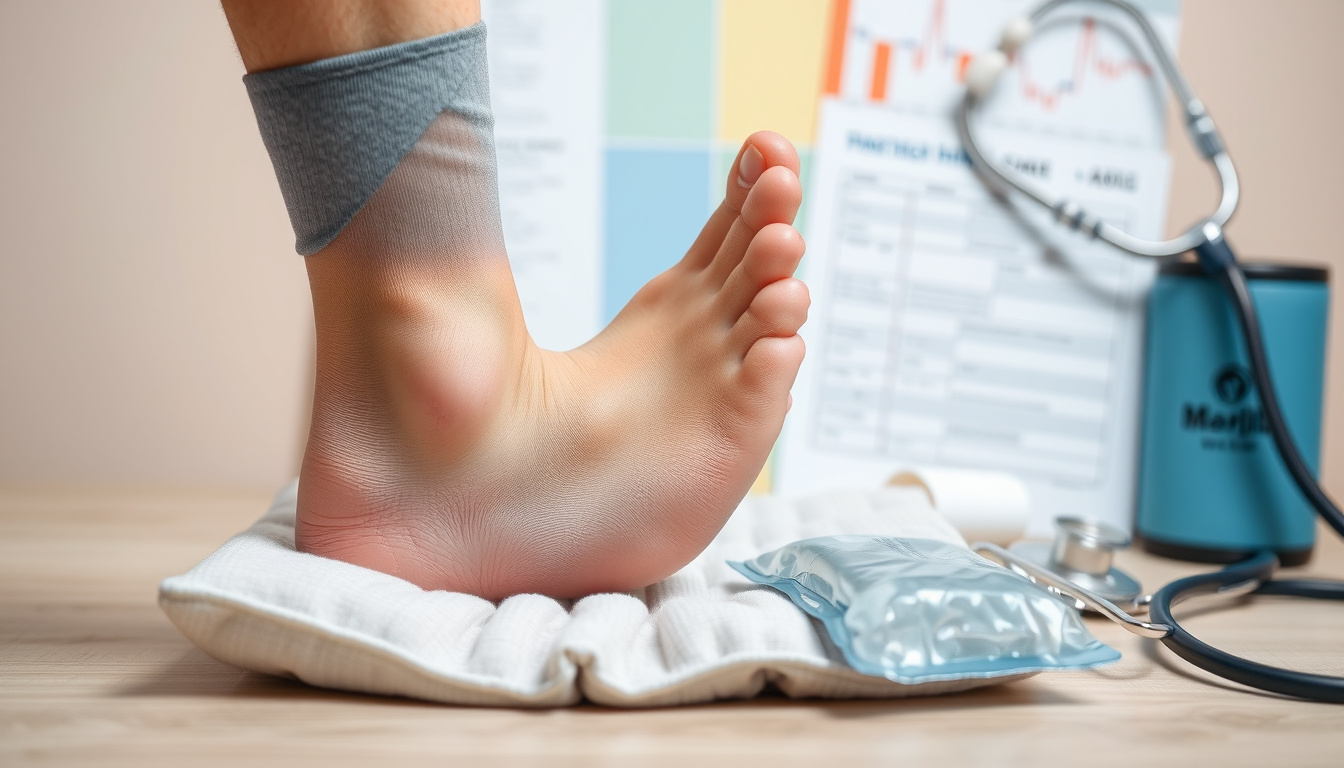
Your ankles feel tight. Your shoes don’t fit like they used to. That puffy feeling in your lower legs is surprisingly common, and more often than not it’s nothing serious. But swollen ankles can also be the first whisper of something your heart or kidneys are trying to tell you.
Most common cause: Fluid retention (edema) due to lifestyle factors ·
Heart failure prevalence (US): 6.5 million adults ·
Self-resolution: Often goes away on its own within a few days
Quick snapshot
- Sudden, one-sided swelling needs urgent care (WebMD)
- Swelling lasting more than a few days requires assessment (NHS)
Swelling in your ankles, feet and legs often goes away on its own, according to the HSE (Ireland’s public health authority). But when it persists, the underlying cause deserves a closer look.
The pattern here is clear: most ankle swelling is benign, but the timeline and accompanying symptoms draw the line between self-care and a doctor’s visit.
| Topic | Details |
|---|---|
| Common causes | Fluid retention, pregnancy, salt intake, inactivity |
| Heart-related | Bilateral pitting edema, breathing difficulty, fatigue |
| Self-care | Elevate legs, reduce salt, compression stockings, exercise |
What is the number one cause of swollen ankles?
Fluid retention — the medical term is edema — sits at the top of the list. Think of your body’s circulatory system as a plumbing network: when fluid leaks into the surrounding tissue faster than it drains away, your ankles pay the price. The NHS (UK’s public health authority) points to salty meals, prolonged sitting or standing, being overweight, and pregnancy as the most frequent triggers. Venous insufficiency — where the valves in your leg veins don’t push blood back up effectively — can also cause fluid to pool in your lower legs, according to the NHS.
Common lifestyle causes (salt intake, inactivity, pregnancy)
- A high-sodium diet encourages your body to hold onto water. Processed foods are the main culprit.
- Sitting or standing in one position for hours slows circulation, allowing gravity to pull fluid down.
- Pregnancy triggers hormonal changes and increased blood volume that cause swelling — usually harmless and temporary.
Medical conditions (edema, venous insufficiency, kidney/liver issues)
- Chronic venous insufficiency: weak vein walls let blood pool in the lower legs, leading to swelling and skin changes.
- Kidney disease: when kidneys don’t filter properly, excess sodium and fluid accumulate. The Cleveland Clinic (renowned U.S. medical centre) lists kidney problems among the major systemic causes.
- Liver disease: a damaged liver fails to produce enough albumin, a protein that keeps fluid inside blood vessels. Fluid then leaks into tissues.
Most swollen ankles are benign and tied to what you ate or how long you stood. But if swelling shows up alongside fatigue, breathlessness, or a change in urine colour, the plumbing problem might be deeper — and it’s time to dig.
Swollen ankles can be caused by lifestyle factors, like eating too much salt and being inactive, notes the British Heart Foundation (the UK’s leading cardiac charity). The distinction between benign and serious often comes down to what else the body is doing at the same time.
The catch: lifestyle-related edema typically resolves with leg elevation and salt reduction; edema tied to organ failure does not — and that persistence is the patient’s clearest signal to seek help.
How to know if swollen ankles are heart related?
Heart failure doesn’t always announce itself with dramatic chest pain. Sometimes it starts with a pair of tight shoes. The British Heart Foundation (BHF) (the UK’s leading cardiac charity) stresses that heart-related swelling usually appears in both legs, leaves a dent when you press it (pitting edema), and does not improve with rest or leg elevation.
Warning signs of heart failure (shortness of breath, fatigue, chest pain)
- Shortness of breath: especially when lying flat or walking short distances. Fluid backs up into the lungs.
- Persistent fatigue: the heart pumps less efficiently, so muscles and organs get less oxygen.
- Sudden weight gain: three to five pounds in a week can signal fluid accumulation.
Other symptoms to watch (sudden weight gain, swelling in other areas)
- Swelling in your abdomen (ascites) or lower back can accompany leg swelling in advanced heart failure.
- Nocturnal cough or wheezing: fluid shifts when you lie down, irritating airways.
The WebMD (trusted consumer health resource) adds that swollen feet combined with chest pain or pressure demand emergency care — do not wait for an appointment.
Bilateral swelling that doesn’t respond to elevation, paired with breathlessness, points to a heart that is struggling to keep up. For patients in the UK, calling 111 or seeing your GP promptly is the safest move.
What this means: when both legs swell and the swelling resists gravity — and breathlessness enters the picture — the heart is the likely suspect, and the patient should act on that suspicion without delay.
How do you get rid of swollen ankles fast?
When the swelling is not a medical emergency, simple mechanical fixes often work within hours. The BHF (cardiac charity) recommends leg elevation above heart level — gravity turns from enemy to ally, helping fluid drain back toward your core. Gentle massage from the ankle upward may also stimulate circulation.
- Elevation: Lie down and prop your legs on 2-3 pillows or a stack of cushions. Aim for 15-30 minutes several times a day.
- Compression: Compression stockings apply graduated pressure that prevents fluid from pooling. They work best when fitted properly.
- Movement: Walking, ankle pumps (flexing and pointing your foot), or swimming encourage blood to return from your legs. Avoid sitting for longer than an hour without standing and stretching.
- Salt reduction: Cutting back on processed foods, canned soups, and salty snacks reduces the amount of sodium your kidneys have to flush out.
The NHS (UK public health body) notes that addressing dietary salt and weight are key self-care strategies for managing edema at home.
Self-care is safe for mild, intermittent swelling after a long day. But persistent symptoms demand a proper workup. For patients, the cost of dismissing a blood clot or early heart failure is far higher than the cost of a GP appointment.
What is best to drink for swollen ankles?
Surprisingly — or unsurprisingly — the answer is water. Your body holds onto fluid when it senses dehydration. Drinking enough water tells your kidneys it’s safe to let go. The BHF (cardiac charity) advocates staying hydrated as part of any swelling management plan.
Water and hydration
- Aim for 6-8 glasses per day unless your doctor has advised fluid restriction (common in kidney or heart failure).
- Water supports kidney filtration and helps maintain electrolyte balance.
Herbal teas (dandelion, green tea)
- Dandelion tea is traditionally used as a mild diuretic — it may encourage your body to shed extra water.
- Green tea contains antioxidants that support circulation, though its effect on swelling is modest.
Fluids to avoid (alcohol, sugary drinks)
- Alcohol and caffeine can be mildly dehydrating, potentially worsening fluid retention in some people.
- Sugary drinks contribute to overall inflammation and may compound the problem.
The implication: hydration helps the kidneys flush sodium, but patients with heart or kidney failure should follow their doctor’s fluid limits — more water is not always better when the pump or filter is compromised.
When should I be concerned about swollen ankles?
Most ankle swelling resolves on its own. But certain patterns turn a nuisance into a warning. The WebMD (consumer health guide) advises contacting a doctor if the swelling is sudden, painful, or limited to one side, or if the skin feels warm and looks red.
Signs of infection (redness, warmth, fever)
- Red, hot, tender skin in the swollen area — especially if you have diabetes or a wound — may indicate cellulitis.
- A fever alongside swelling suggests an infection that needs antibiotics.
Signs of blood clot (DVT) (one-sided swelling, pain)
- Swelling in only one leg, especially with a cramping or aching sensation, can signal deep vein thrombosis. The BHF (cardiac charity) warns that DVT requires emergency care.
- Mobilising an undiagnosed clot can dislodge it and cause a pulmonary embolism.
Systemic symptoms (chest pain, shortness of breath)
- Chest pain or pressure plus swollen legs points to a possible heart or lung emergency.
- Shortness of breath that worsens when lying down is a classic sign of fluid overload.
The pattern: one-sided swelling plus pain points to a clot; bilateral swelling plus breathlessness points to heart failure. In both cases, the patient’s safest move is urgent medical evaluation, not waiting to see if it passes.
Related reading: Signs of ADHD guide · toothbrush holder hygiene guide
kdmshospital.com, ubiehealth.com, achillesfootandankle.com, yeagerfoot.com, acibademinternational.com, nm.org, medicalnewstoday.com, health.harvard.edu, pressejournal.fr
Frequently asked questions
Can swollen ankles be a sign of kidney disease?
Yes. When kidneys aren’t filtering properly, sodium and fluid build up. The swelling is usually bilateral and can be accompanied by foamy urine or changes in urination frequency. The Cleveland Clinic (U.S. medical centre) lists kidney disease among the major causes of generalized edema.
Is it safe to exercise with swollen ankles?
Generally yes, as long as the swelling is not caused by an acute injury or infection. Walking, swimming, and ankle pumps can help move fluid out of the legs. The BHF (cardiac charity) recommends gentle movement to stimulate circulation.
Does drinking more water help reduce swelling?
For many people, yes. Adequate hydration tells the kidneys to release excess sodium and fluid. However, patients with heart failure or advanced kidney disease are often on fluid restrictions, so check with your doctor first.
What medications cause swollen ankles?
Certain blood pressure medicines (calcium channel blockers like amlodipine), hormone therapies, antidepressants, steroids, and NSAIDs can cause fluid retention, according to the NHS (UK health authority).
How long does swelling last after a long flight?
Flight-related swelling usually resolves within a few hours of walking and moving around. Compression stockings and frequent leg stretches during the flight can minimize it. Persistent swelling beyond 24 hours should be checked.
Are swollen ankles a sign of diabetes?
Swollen ankles are not a direct symptom of diabetes, but the condition can contribute through peripheral neuropathy (reduced nerve sensation leads to unrecognized injury) or diabetic kidney disease. Diabetic patients should inspect their feet daily for cuts or blisters.
Can pregnancy cause swollen ankles?
Yes, it’s one of the most common pregnancy symptoms. Increased blood volume, hormonal shifts, and pressure from the growing uterus all contribute. The NHS (UK health authority) reassures that it is usually harmless but advises mentioning it to your midwife to rule out pre-eclampsia.
Your ankles are a window into your circulation, your diet, and sometimes even your heart. For the vast majority of people, the swelling that shows up after a long shift or a salty takeaway is nothing more than gravity doing its job. But when that puffiness refuses to budge, travels up your leg, or brings breathlessness with it, listen. The difference between a nuisance and a sign is small — and the doctors who treat these conditions every day would rather see you too early than too late.
For anyone in the UK with persistent swelling, the NHS (public health service) recommends speaking to your GP. The call takes five minutes. The alternative — ignoring a heart or kidney problem that could be managed — lasts much longer.

George Thompson is Senior Reporter at UrbanMixr.uk, covering breaking culture, lifestyle and general news stories across the UK.