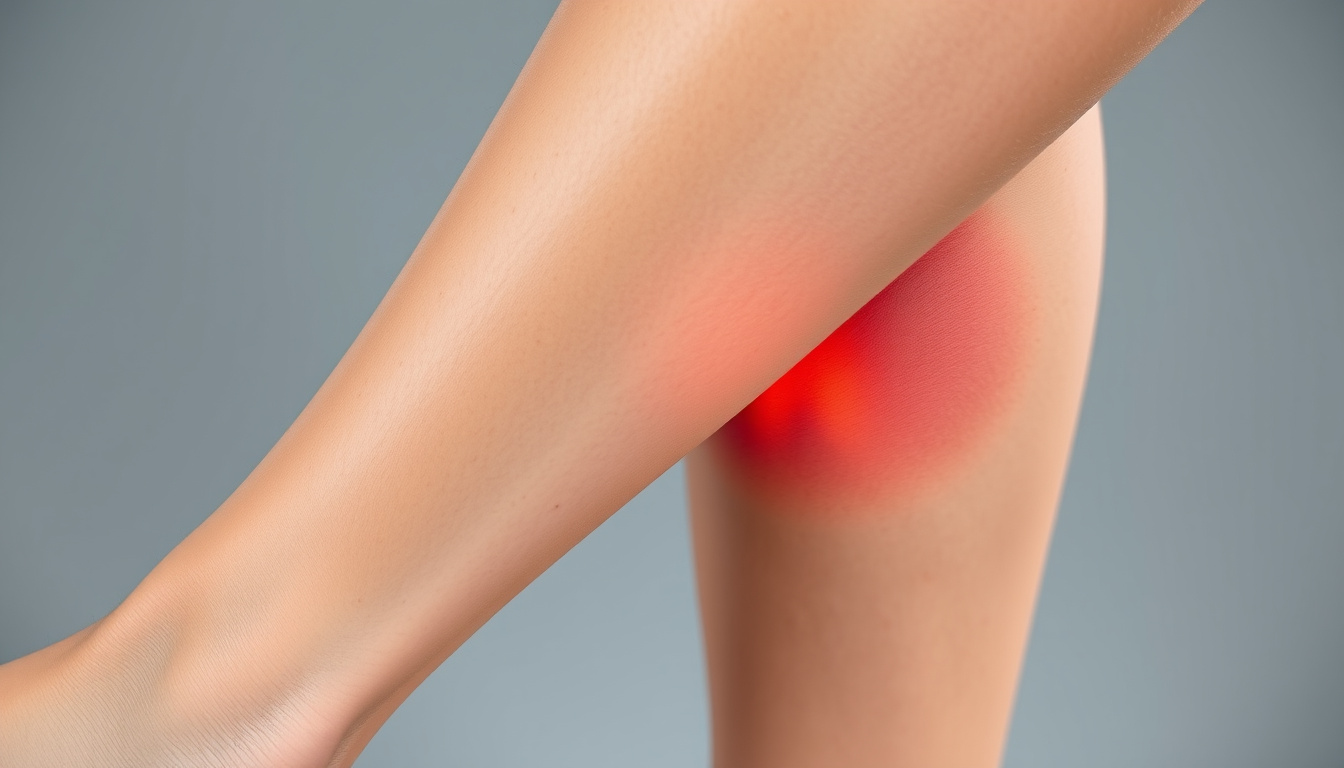
Noticing a swollen calf after a long flight, or a sore spot that won’t fade? These could be early signals of deep vein thrombosis—a blood clot in the leg that needs attention. Medical authorities point to swelling in one leg, calf pain that feels like a cramp, and skin that stays warm to the touch as the key warning signs to watch for. Below is what you need to recognize, how to respond, and why waiting it out is never the right call.
Swelling location: Usually one leg or calf · Pain description: Cramping or soreness starting in calf · Skin change: Red or purple discoloration · Warmth site: Affected leg area · Tenderness type: Like a charley horse
Quick snapshot
- Swelling in one leg is a primary DVT sign per Mayo Clinic (Mayo Clinic)
- Pain or cramping in the calf often feels like a pulled muscle per World Thrombosis Day (World Thrombosis Day)
- Duplex ultrasound is the standard diagnostic test per CDC and Mayo Clinic (CDC)
- Home self-checks like Homan’s sign cannot confirm or rule out DVT reliably
- Some patients show no symptoms until a pulmonary embolism occurs
- Exact symptom onset timing varies between individuals
- Symptoms may develop within days of clot formation or remain silent for weeks (USA Vein Clinics)
- Risk of pulmonary embolism increases if DVT is untreated within hours to days (USA Vein Clinics)
- Up to 300,000 people die yearly in the US from blood clots including DVT per USA Vein Clinics (USA Vein Clinics)
- Seek medical evaluation immediately if symptoms appear
- Doctors use duplex ultrasound and D-dimer testing to confirm diagnosis
- Treatment typically involves anticoagulant medication per NHS guidance
| Attribute | Value |
|---|---|
| Primary symptom | Leg swelling |
| Pain location | Calf or thigh |
| Diagnosis gold standard | Ultrasound |
| Complication risk | Pulmonary embolism |
| Typical onset | One-sided symptoms |
| Skin appearance | Red or purple discoloration |
| Warmth indicator | Affected leg area |
| Silent DVT rate | Up to 40% |
The key facts table summarizes the most consistent clinical markers across authoritative sources, making it easy to spot the difference between routine leg discomfort and a potential emergency.
What are the first signs of a blood clot in your leg?
Mayo Clinic lists swelling in one leg, pain that starts in the calf and feels like cramping or soreness, skin that changes color, and warmth in the affected area as the core early symptoms. These signals often appear on just one side of the body because the clot blocks blood flow and causes pooling in that limb.
Pain and cramping details
The pain from a DVT often mimics a pulled muscle—it aches and does not improve with rest. Mayo Clinic describes it as cramping or soreness that typically starts in the calf. Unlike a strain, this pain tends to worsen rather than fade over hours or days.
Swelling patterns
One leg swelling below the knee is a hallmark sign. StopTheClot.org confirms that swelling in one leg or arm accompanied by leg pain like a cramp, reddish or bluish discoloration, and warmth to the touch are among the top indicators.
Skin changes
Redness or warmth in the affected leg points to possible DVT per UC Davis Health. The discoloration can range from a faint pink streak to a more pronounced purple hue, depending on the clot’s severity and location.
How do you check for blood clots in legs at home?
There is no reliable home test that can diagnose DVT. The so-called Homan’s sign—squeezing the calf while the knee is extended and the leg is raised to about 10 degrees—has been described in medical literature, but it lacks the sensitivity and specificity needed for accurate diagnosis. CDC and Mayo Clinic both emphasize that anyone with symptoms needs professional evaluation.
Home test steps
If you want to observe changes at home, the Kimmel Institute describes Homan’s test as extending the knee, raising the leg to roughly 10 degrees, and squeezing the calf while flexing the foot to check for deep pain. However, CDC states this maneuver is not a dependable diagnostic tool on its own.
Homan’s sign caution
The CDC does not endorse Homan’s sign as a diagnostic method. A negative result does not rule out DVT, and a positive result can occur with other conditions like muscle strain or injury. Kafri Heart & Vascular Clinic notes that DVT cannot be reliably diagnosed or fixed at home and requires medical expertise.
When to seek help
If you notice swelling in one leg, calf pain that feels like a cramp, or skin that is warm and discolored, contact a doctor right away. Inovia Vein confirms that there is no reliable home check for DVT—professional evaluation is essential whenever these symptoms are present.
Homan’s sign is unreliable and widely discouraged by medical authorities. Relying on it at home can delay diagnosis and increase the risk of complications like pulmonary embolism. Any suspicion of DVT warrants an immediate call to a healthcare provider.
The implication: Skipping professional evaluation because a home test seems reassuring can be fatal if a clot is present.
What are the five warning signs of a blood clot?
StopTheClot.org identifies five key warning signs: swelling in one leg or arm, leg pain described as cramp-like, reddish or bluish skin discoloration, skin that feels warm to the touch, and tenderness in the affected limb. These symptoms often cluster together, though not every patient experiences all five.
Top five from sources
The Mayo Clinic symptoms page lists leg swelling, pain or cramping or soreness in the calf, change in skin color, and warmth as the primary indicators. UC Davis Health adds heaviness or aching in the leg to the early warning signs list, noting that symptoms often appear on one side of the body.
Thigh vs calf differences
DVT can develop in the deep veins of the thigh or the calf. Vein Centre notes that inner thigh pain can indicate DVT in the thigh veins, and it is often mistaken for a muscle strain. Calf-level clots tend to produce the classic cramp-like pain that most people associate with DVT.
Thigh-vein DVT carries a higher risk of embolism than calf-vein DVT. If thigh pain or extensive leg swelling occurs, seeking emergency care becomes even more urgent. A healthcare provider can determine the exact location and severity through imaging.
What this means: The location of the clot influences both symptom presentation and urgency level—higher clots demand faster response.
Will a blood clot in the leg go away on its own?
DVT rarely resolves without treatment. The body can eventually break down small clots in some cases, but larger ones or those in high-risk locations persist and grow. Without anticoagulant medication, the clot can enlarge and potentially break loose, traveling to the lungs as a pulmonary embolism.
Risks of no treatment
Mayo Clinic states that DVT can occur without noticeable symptoms, which makes skipping treatment especially dangerous. Estimates suggest up to 40% of DVT patients may lack symptoms until pulmonary embolism develops per some clinical sources. This silent progression is why early detection matters.
Medical intervention needs
Treatment typically involves anticoagulants to prevent the clot from growing and to give the body time to dissolve it. Mayo Clinic’s diagnostic page notes that duplex ultrasound uses sound waves to create pictures of how blood flows through the veins and is the standard test for confirming DVT before starting treatment. The CDC confirms that duplex ultrasonography is the standard imaging for detecting blockages.
What happens next
If you have symptoms and a positive diagnosis, a doctor will likely prescribe blood-thinning medication and advise you to avoid prolonged immobility. Follow-up imaging may be ordered to confirm the clot is shrinking. In some cases, compression stockings are recommended to reduce swelling.
What can be mistaken for a blood clot in your leg?
Several conditions mimic DVT symptoms, which is why self-diagnosis is risky. Muscle strains, cellulitis, and other inflammatory conditions can produce similar swelling, pain, and skin changes. World Thrombosis Day notes that DVT pain feels like a pulled muscle that does not improve with rest—the same description that applies to strains, which causes confusion.
Muscle strain similarities
Both DVT and muscle strain cause calf pain and tenderness. The key difference is that strain pain typically eases with rest within a few days, while DVT pain persists or worsens. Vein Centre confirms that inner thigh pain can be mistaken for muscle strain when DVT occurs in the thigh veins.
Cellulitis signs
Cellulitis, a bacterial skin infection, causes redness, warmth, and swelling that can resemble DVT. Unlike DVT, cellulitis often comes with fever, chills, and a spreading rash. The discoloration pattern differs too—cellulitis tends to spread outward from a wound or break in the skin, while DVT discoloration stays more localized to the affected vein area.
Other conditions
Varicose veins, Baker’s cysts, and even heart failure can cause leg swelling and discomfort. USA Vein Clinics notes that DVT symptoms often mimic cramp, including unexplained cramping, swelling, tenderness, and redness or discoloration. Ultrasound is the only way to definitively confirm or rule out DVT among these possibilities.
Trying to distinguish DVT from other conditions at home is guesswork. The risk of misdiagnosis is real, and the stakes are high—a missed DVT can turn into a pulmonary embolism. When in doubt, seek a professional evaluation and insist on imaging if symptoms persist.
The catch: Without proper imaging, patients and even clinicians can easily miss a dangerous clot while treating a presumed minor injury.
Confirmed facts
- Swelling in one leg is a primary DVT sign per Mayo Clinic (Mayo Clinic)
- DVT pain feels like a pulled muscle not improving with rest per World Thrombosis Day (World Thrombosis Day)
- Duplex ultrasound is the standard diagnostic tool per CDC and Mayo Clinic (CDC)
- DVT most commonly occurs in legs per StopTheClot.org (StopTheClot.org)
- Redness or warmth in the affected leg indicates possible DVT per UC Davis Health (UC Davis Health)
What remains unclear
- How reliably Homan’s sign can indicate DVT in a clinical setting
- The exact percentage of DVT patients who are completely asymptomatic (estimates range from 30–40%)
- How quickly a clot can travel from the leg to the lungs in individual cases
Quotes
“Most serious DVTs occur in the legs. Symptoms often appear on one side of the body.”
UC Davis Health (Medical Blog)
“Duplex ultrasound. This noninvasive test uses sound waves to create pictures of how blood flows through the veins. It’s the standard test for diagnosing DVT.”
Mayo Clinic (Medical Authority)
“It is the standard imaging test to diagnose DVT.”
CDC (Public Health Authority)
The implication: Whether you are an airline passenger on a long flight, a recent surgery patient, or someone with a family history of clotting disorders, the takeaway is the same—do not wait for symptoms to get worse. If your leg swells, aches, or looks discolored, the move is straightforward: call your doctor or head to urgent care. Home tests like Homan’s sign are not diagnostic, and no amount of internet searching replaces an ultrasound.
Related reading: pins and needles in hands · co-codamol 8mg/500mg uses dosage
thekimmelinstitute.com, mayocliniclabs.com, regionvein.com, kafri.com, veinreliever.com, inoviavein.com
Swelling, pain, and redness often mark the first key signs of leg blood clots, prompting many to seek immediate medical evaluation for deep vein thrombosis.
Frequently asked questions
How to test for DVT at home?
There is no reliable home test. While some sources describe Homan’s sign—squeezing the calf with the leg raised—CDC does not endorse it as a diagnostic tool. If you have symptoms like one-sided leg swelling, calf pain, or skin discoloration, seek professional evaluation. Doctors use duplex ultrasound and D-dimer blood testing to confirm diagnosis.
What are the 10 signs of a blood clot in your leg?
Mayo Clinic, CDC, and StopTheClot.org cite these common indicators: swelling in one leg, calf pain that feels like a cramp, skin redness or purple discoloration, warmth in the affected area, tenderness like a charley horse, heaviness or aching in the leg, a dull ache that worsens with walking, inner thigh pain (if the clot is higher), visible veins near the skin surface, and in severe cases, difficulty breathing if pulmonary embolism occurs.
How fast does a blood clot travel from the leg to the lungs?
The time frame varies. A clot can break loose and travel to the lungs within hours, days, or even weeks if it remains undiagnosed and untreated. The risk of pulmonary embolism is why prompt medical attention is critical whenever DVT is suspected.
What does a blood clot in the leg look like?
From the outside, the leg may appear swollen in one limb, with skin that looks reddish or purplish compared to the other leg. The affected area often feels warmer to the touch. Visible surface veins may become more prominent. Keep in mind that internal clots are not visible—imaging like duplex ultrasound is required to see them directly.
How do you know if you have a blood clot?
Watch for one-sided leg swelling, calf pain that feels like a cramp or charley horse, skin that stays red or discolored, and warmth in the affected area. Mayo Clinic lists these as core symptoms. If symptoms appear suddenly or worsen over days rather than improving with rest, contact a healthcare provider immediately.
Can a blood clot in a leg go away on its own?
Rarely, and not reliably. Without anticoagulant medication, larger clots tend to persist or grow. Waiting it out increases the risk of the clot breaking loose and causing a pulmonary embolism. Medical treatment is essential in virtually all cases.
What are the first signs of a blood clot?
Mayo Clinic identifies leg swelling in one limb, calf pain that starts as cramping or soreness, skin color changes, and warmth as the earliest signals. UC Davis Health adds heaviness or aching in the leg. These symptoms often appear on just one side of the body and may worsen with activity rather than improving with rest.

Sophie Larkin is Culture & Events Editor at UrbanMixr.uk, covering UK culture, events, festivals, arts and pop culture.