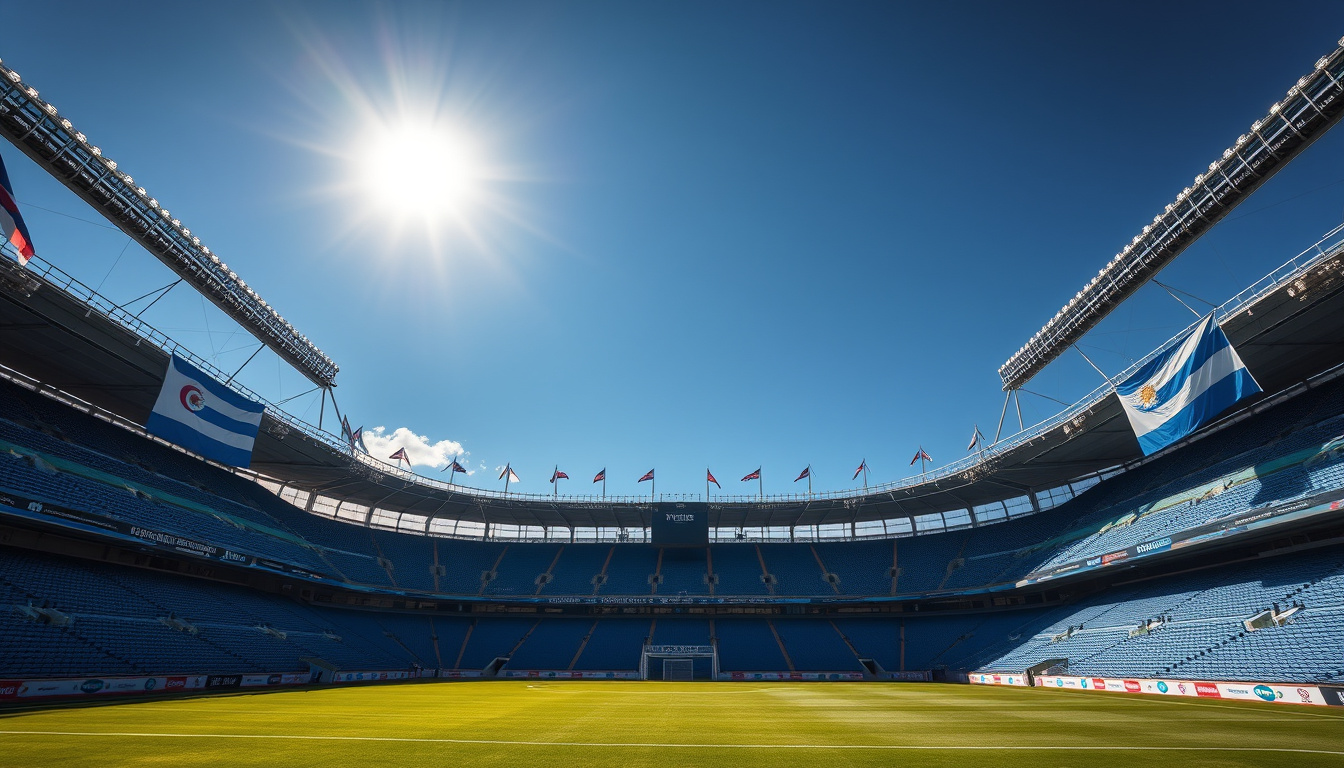

Uruguay’s national football team, nicknamed La Celeste, stands among South America’s most successful national sides. Managed by Marcelo Bielsa since May 2023, the team combines seasoned veterans with emerging talent as it navigates the 2026 World Cup qualifying campaign.
The squad has demonstrated consistent strength in CONMEBOL qualifiers, maintaining a position near the top of the standings. With players competing at major European and South American clubs, Uruguay continues its tradition of producing technically skilled footballers who embody the famous garra charrúa spirit.
The team plays its home matches at the iconic Estadio Centenario in Montevideo, wearing the traditional sky blue jersey that has inspired generations of Uruguayan footballers since the association’s founding in 1900.
Who are the current Uruguay national football team players?
The Uruguay national football team roster for the 2026 World Cup qualifiers reflects a blend of experience and youth. The squad averages 24.4 years old with an average height of 1.80 meters, according to recent selection data from the CONMEBOL qualifying matches.
Goalkeepers
Sergio Rochet anchors the goalkeeping position as the first-choice keeper. The 30-year-old stands at 1.90 meters and plays for Internacional. Santiago Mele, at 26 years old and 1.82 meters, represents Monterrey as secondary cover. Veteran Fernando Muslera, now with Estudiantes, remains part of the squad as the number 23 goalkeeper.
Defenders
José María Giménez serves as a key central defender at Atlético Madrid. Ronald Araújo, playing for Barcelona, provides versatility as both centre-back and right-back. The defensive line also features Guillermo Varela from Flamengo, Mathias Olivera at Napoli, and Santiago Bueno at Wolverhampton.
Midfielders
Federico Valverde from Real Madrid represents one of the squad’s most influential players, capable of operating in multiple midfield roles. Manchester United’s Manuel Ugarte anchors the defensive midfield position. Giorgian de Arrascaeta and Nicolás de la Cruz, both from Flamengo, contribute creative attacking options from the middle of the park.
Forwards
Darwin Núñez leads the attack at 24 years old, now playing for Al-Hilal in Saudi Arabia following his Liverpool tenure. Luis Suárez, at 36, continues as captain and remains Uruguay’s all-time leading scorer. Facundo Pellistri and Agustín Canobbio provide width and depth to the forward line.
The squad composition shows intentional balance between experienced internationals and younger players developing at top clubs. This approach aims to maintain competitive consistency while planning for post-Suárez era transitions.
- Squad average age: 24.4 years
- Squad average height: 1.80 meters
- Captain: Luis Suárez (36, FW/ST)
- Key attackers: Darwin Núñez and Federico Valverde
- Defensive leaders: Giménez and Araújo
- Home venue: Estadio Centenario, Montevideo
- Association: AUF (Asociación Uruguaya de Fútbol)
| Position | Notable Players |
|---|---|
| Goalkeeper | Sergio Rochet (Internacional) |
| Centre-back | José María Giménez (Atlético Madrid), Ronald Araújo (Barcelona) |
| Right-back | Guillermo Varela (Flamengo) |
| Left-back | Mathias Olivera (Napoli), Matías Viña (River Plate) |
| Defensive Midfield | Manuel Ugarte (Manchester United) |
| Central Midfield | Federico Valverde (Real Madrid) |
| Attacking Midfield | Giorgian de Arrascaeta (Flamengo) |
| Forward | Darwin Núñez (Al-Hilal), Luis Suárez (captain) |
What are the Uruguay national football team matches and fixtures?
Uruguay competes in the CONMEBOL round-robin qualifying tournament for the 2026 FIFA World Cup, which will be hosted across Mexico, the United States, and Canada. The qualification process involves matches against other South American national teams throughout 2024 and 2025, with final positions determining World Cup qualification.
Qualification Campaign Overview
The March 2026 squad selection targeted key matches in the qualifying calendar. Uruguay has maintained a strong position in the standings, with consistent call-ups for key performers including Federico Valverde and Manuel Ugarte indicating their importance to the campaign.
Recent selections have drawn from players across European and South American clubs, reflecting the global distribution of Uruguayan talent. The coaching staff monitors player form throughout domestic seasons before finalising matchday squads.
CONMEBOL qualifiers operate as a continuous round-robin format, meaning each team faces every other South American side. Results accumulate throughout the qualification period, with the top positions securing direct World Cup berths.
Who are the Uruguay national football team players legends?
Uruguay’s footballing history extends far beyond the current generation. The national team has accumulated two FIFA World Cup titles and fifteen Copa América victories, creating a legacy that shapes player development and national identity.
Historical Greats
Luis Suárez currently serves as captain and holds the position of Uruguay’s all-time leading scorer with over sixty-eight international goals. His career spans multiple World Cups and represents the continuation of a goalscoring tradition established by earlier generations.
Diego Forlán, the 2010 FIFA World Cup Golden Ball winner, remains one of the most celebrated players in the nation’s history. Obdulio Varela led Uruguay during the famous 1950 Maracanazo victory over Brazil, a moment that remains central to the team’s identity.
Current players like Darwin Núñez represent the emerging generation following in these footsteps. The transition between established icons and younger players defines Uruguay’s approach to maintaining competitive standards.
With Luis Suárez approaching the later stages of his career, the team management faces the challenge of integrating younger forwards while preserving the competitive culture established by previous generations. This transition represents a natural phase in the squad’s evolution.
Achievement Summary
- World Cup titles: 1930 and 1950
- Copa América titles: 15 total
- Distinctive characteristic: garra charrúa (fighting spirit)
- Quarter-final finishes: 2010 and 2022 World Cups
- World Cup 2011 victory under Óscar Tabárez
What is the Uruguay national football team jersey like?
The Uruguay national football team jersey features the iconic sky blue colour that gave the team its nickname, La Celeste. This celestial blue has represented Uruguay since the association’s founding in 1900, creating one of football’s most recognisable visual identities.
The jersey incorporates white shorts and white or black socks, completing the traditional kit that Uruguay wears during home matches. The design has evolved through various manufacturers while maintaining the sky blue as its defining characteristic. For a deeper dive into the team’s performance, you can read the Brentford Arsenal otteluanalyysi.
Uruguay plays home fixtures at the Estadio Centenario in Montevideo, a venue that holds special significance in football history. The stadium, built for the 1930 World Cup, provides an atmospheric backdrop for home matches and connects current players to the venue’s historic legacy.
The jersey represents both sporting identity and national symbolism. Sky blue colours appear throughout Uruguayan culture, from flags to public emblems, reinforcing the football shirt’s significance beyond the sporting context.
How has Uruguay’s football history shaped the modern team?
The foundation of Uruguayan football in 1900 established traditions that continue influencing the national team. The 1930 and 1950 World Cup victories created a trophy cabinet that ranks among the most prestigious globally, achieved during eras when South American football commanded global respect.
The garra charrúa concept originated from the indigenous Charrúa people and evolved into a national philosophy emphasising resilience, fighting spirit, and technical capability. This identity manifests through Uruguay’s playing style and player temperament under pressure.
Recent coaching under Marcelo Bielsa, appointed in May 2023, introduced a high-pressing tactical approach that builds upon these traditions while modernising the team’s strategic framework. Bielsa aims to improve upon his 2010 World Cup performance with Chile, where he reached the round of sixteen.
What is known versus uncertain about Uruguay’s 2026 World Cup prospects?
| Established Information | Uncertain Elements |
|---|---|
| Coach: Marcelo Bielsa since May 2023 | Specific qualification match results |
| Captain: Luis Suárez | Final 2026 World Cup squad composition |
| Strong position in CONMEBOL qualifiers | Exact group stage opponents at World Cup |
| Roster composition with Valverde, Ugarte, Núñez | Player form leading to tournament |
| Traditional sky blue jersey and home venue | Impact of potential injuries on squad depth |
How does Uruguay operate within South American football?
The Asociación Uruguaya de Fútbol administers the national team programme, coordinating with FIFA and CONMEBOL for competitive fixtures. This structure connects Uruguay to global football governance while maintaining autonomy over domestic football development.
The CONMEBOL qualification system presents significant challenges, with ten national teams competing for limited World Cup berths. Uruguay’s consistent performance historically reflects the nation’s ability to develop talent capable of competing at continental level.
The national football programme operates through coordinated efforts between the association, coaching staff, and clubs where players develop their professional careers across multiple continents.
Summary
The Uruguay national football team represents one of South America’s most accomplished national sides, combining historical success with current competitive ambitions. Under Marcelo Bielsa’s management since May 2023, the squad blends experienced internationals including captain Luis Suárez with emerging talents like Darwin Núñez and Federico Valverde. The team’s traditional sky blue jersey and home venue at Estadio Centenario connect contemporary achievements to a rich footballing heritage. As Uruguay progresses through the 2026 World Cup qualification campaign, the combination of garra charrúa spirit and tactical evolution positions the team among the continent’s leading contenders.
Frequently Asked Questions
Who is the captain of the Uruguay national football team?
Luis Suárez serves as captain of Uruguay. He is also the nation’s all-time leading scorer with over sixty-eight international goals.
Where does Uruguay play home matches?
Uruguay plays home matches at the Estadio Centenario in Montevideo, a stadium built for the 1930 FIFA World Cup.
Who manages the Uruguay national football team?
Marcelo Bielsa has managed Uruguay since May 2023. He is known for implementing a high-pressing tactical style.
What colour is Uruguay’s traditional football jersey?
Uruguay wears a sky blue jersey, giving the team its nickname La Celeste. The kit includes white shorts and white or black socks.
How many World Cups has Uruguay won?
Uruguay has won two FIFA World Cups, in 1930 as hosts and in 1950 in the famous Maracanazo against Brazil.
Who are Uruguay’s key players for 2026 qualifiers?
Key players include Federico Valverde (Real Madrid), Manuel Ugarte (Manchester United), Darwin Núñez (Al-Hilal), and José María Giménez (Atlético Madrid).
What is the garra charrúa?
Garra charrúa refers to Uruguay’s distinctive fighting spirit, named after the indigenous Charrúa people. It represents resilience and determination in competitive football.

Emily Ward is UK Managing Editor at UrbanMixr.uk, running the daily news list, publishing schedule and city-guide planning.