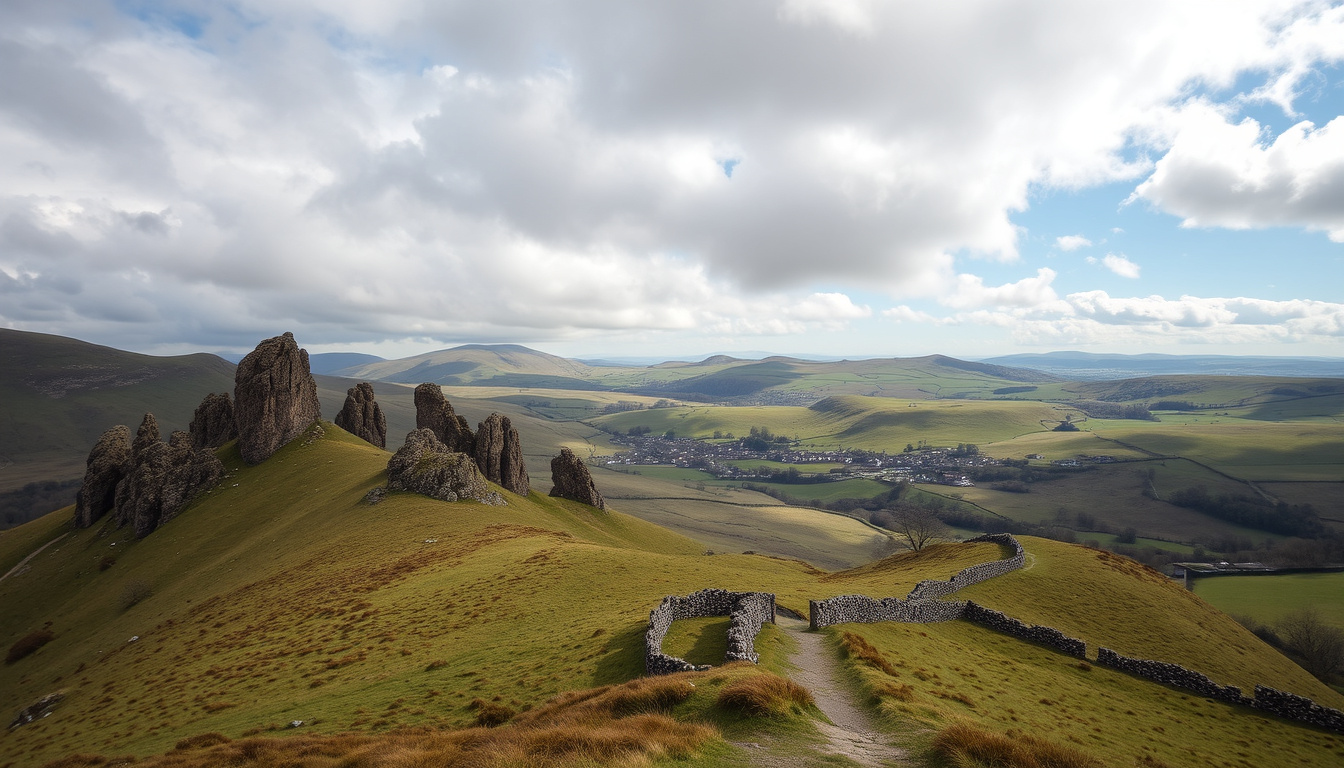
It’s been over 70 years since the Peak District became Britain’s first national park, and it still pulls in more than 10 million visitors a year – more than any other UK park. This guide unpacks why: from the seven wonders and picture-postcard towns to family trails and the crucial difference between the Dark Peak and White Peak landscapes.
Designated: 1951 ·
Area: 555 sq mi (1,438 km²) ·
Highest point: Kinder Scout (2,087 ft / 636 m) ·
Annual visitors: 10 million+ ·
Counties covered: 6
Quick snapshot
- First UK national park, designated on 17 April 1951 (VisitBritain (UK’s national tourism agency))
- Covers 555 sq mi (1,438 km²) across six counties (VisitBritain)
- Highest point is Kinder Scout at 636 m (2,087 ft) (Boutique Retreats (specialist accommodation guide))
- The exact list of the “Seven Wonders of the Peak” varies among local sources (Boutique Retreats notes historic mentions)
- 17 April 1951 – becomes the first national park in the United Kingdom (VisitBritain)
- Over 10 million visitors annually, maintaining its status as the UK’s most-visited national park (Cottages.com (holiday lettings platform))
The Peak District’s dual geology – gritstone Dark Peak and limestone White Peak – means two distinct experiences in one park. Choosing the wrong side for your activity can make or break a trip.
The table below compiles the essential numbers every visitor should know.
| Established | 17 April 1951 |
|---|---|
| Area | 555 sq mi (1,438 km²) |
| Highest point | Kinder Scout (636 m) |
| Visitor numbers | 10 million+ annually |
| National park status | First in the United Kingdom |
“The Peak District was the first national park in the UK, designated in 1951.”
VisitBritain
Where is the Peak District National Park located?
Central England location
The Peak District sits in central England, roughly 60 miles from Manchester, Sheffield, Leeds, and Nottingham, making it the most accessible national park for millions of urban residents. It spans 555 sq mi (1,438 km²) across six counties: Derbyshire, Staffordshire, Cheshire, Greater Manchester, West Yorkshire, and South Yorkshire.
Counties and boundaries
The park’s boundaries roughly follow the A515, A6, and A57 roads. The majority of the park lies in Derbyshire, but it also reaches into the outskirts of Greater Manchester and South Yorkshire.
This central location explains why the Peak District attracts more visitors than any other UK park.
What are the 7 wonders of the Peak District?
The traditional Seven Wonders of the Peak
The seven wonders were first catalogued by historian Charles Cotton in 1681. The list includes Mam Tor (the “Shivering Mountain”), Peak Cavern (the “Devil’s Arse”), Chatsworth House, and Dovedale, among others. Not all are natural – Chatsworth is a stately home.
Modern interpretations
Modern tourism boards often adapt the list to include viewpoints like Stanage Edge and the Heights of Abraham. The exact list varies, which is why a single “official” list remains elusive.
The seven wonders are a classic marketing device, but the most popular “wonder” today – Dovedale’s stepping stones – wasn’t on Cotton’s original list.
The shifting definition of the wonders reflects the park’s evolving appeal.
“The Peak District National Park Authority works to protect the park’s landscape and heritage for future generations.”
Peak District National Park Authority
What are the most beautiful towns and scenic spots in the Peak District?
Prettiest towns: Bakewell, Castleton, and others
Bakewell is widely described as the biggest town inside the Park and is famous for its Bakewell pudding and its Grade I-listed medieval five-arched bridge. Castleton offers four show caves – Blue John Cavern, Speedwell Cavern, Peak Cavern, and Treak Cliff Cavern – plus the ruins of Peveril Castle.
Must-see natural spots: Mam Tor, Dovedale, Winnats Pass
Mam Tor provides panoramic views over the Hope Valley and is accessible via a short but steep walk. Dovedale’s limestone ravines and stepping stones are among the most photographed features in the park. Winnats Pass, a dramatic limestone gorge near Castleton, is a favourite for photographers.
The pattern: every one of these spots is free to visit, but parking fills by 9am on summer weekends. What this means: plan to arrive early or use public transport to the Hope Valley.
What to do with kids in the Peak District?
Family-friendly walks and outdoor activities
The Monsal Trail – 8.5 miles of traffic-free former railway – is ideal for cycling and pushchairs. The Tissington Trail (13 miles) and High Peak Trail (17 miles) also follow old railway lines. Padley Gorge offers a short woodland trail with streams and boulders that children love.
Indoor attractions and rainy-day options
Carsington Water has cycling trails, pedalos, and a visitor centre. The Crich Tramway Village combines vintage tram rides with a museum. The Heights of Abraham in Matlock Bath includes a cable car, cavern tours, and a fossil exhibition – all undercover.
Families will find the White Peak particularly accommodating.
Which part of the Peak District is best to visit?
Dark Peak vs White Peak
The park splits naturally into two geological halves. The Dark Peak (north and east) is gritstone, wild moorland, and steep escarpments – ideal for challenging hikes and climbing. The White Peak (south and west) is limestone, green rolling dales, and stone villages – perfect for gentle walks and history.
Recommendations based on interests
- For first-time visitors: the central area around Bakewell and Matlock offers a mix of both landscapes and easy access to attractions.
- For serious hikers: Dark Peak – Kinder Scout and Bleaklow demand navigation skills.
- For families and casual walkers: White Peak – Dovedale, Tissington Trail, and the Monsal Trail.
The trade-off: Dark Peak rewards with solitude and dramatic views, but White Peak wins on village charm and convenience.
For a deeper look at the park’s seven wonders and family-friendly towns, check out our detailed guide to the Peak District.
Frequently Asked Questions
How do I get to the Peak District National Park?
Trains connect Manchester and Sheffield to Edale, Hope, and Buxton. The park is within an hour’s drive of four major cities.
Is there an entrance fee for the Peak District?
No, there is no entrance fee. It is a national park, not a pay-to-enter attraction.
Are dogs allowed in the Peak District National Park?
Yes, dogs are welcome on most trails and in many villages, but must be kept under control near livestock.
What is the best time of year to visit the Peak District?
Spring (April to June) and autumn (September to November) offer mild weather and fewer crowds. Summer weekends can be very busy.
Can you camp anywhere in the Peak District?
Wild camping is not permitted without landowner permission. There are many campsites and designated camping barns.
Confirmed facts
- The Peak District was the first national park in the UK, designated in 1951 (VisitBritain).
- Kinder Scout is the highest point at 636 m (2,087 ft) (Boutique Retreats).
- The Monsal Trail is 8.5 miles, traffic-free (VisitBritain).
What’s unclear
- The precise list of the “Seven Wonders of the Peak” varies among local sources (Boutique Retreats notes historic mentions).
- Annual visitor numbers are estimated at 10 million+ but no official exact count is published.
- The total footpath network is often cited as 1,800 miles, but the exact figure varies.
- The boundary between Dark Peak and White Peak is not officially defined; it’s a geological distinction.
- The exact height of Kinder Scout is sometimes listed as 2,086 ft instead of 2,087 ft.
For anyone planning a visit, the key takeaway is to match your chosen area to your preferred activity, as the Peak District’s dual personality offers distinct experiences.

Andreas Nicolaou is Editor-in-Chief at UrbanMixr.uk, overseeing editorial policy, corrections, standards and publication decisions.