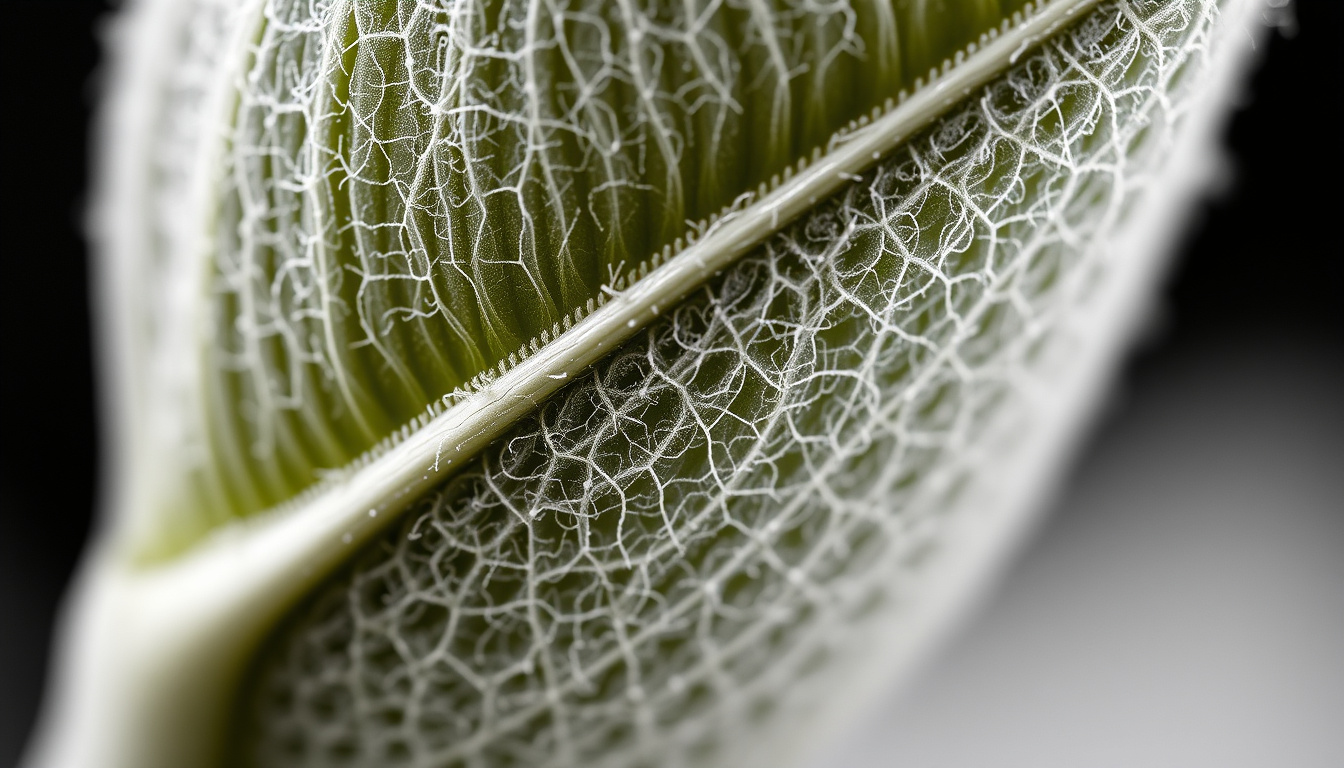
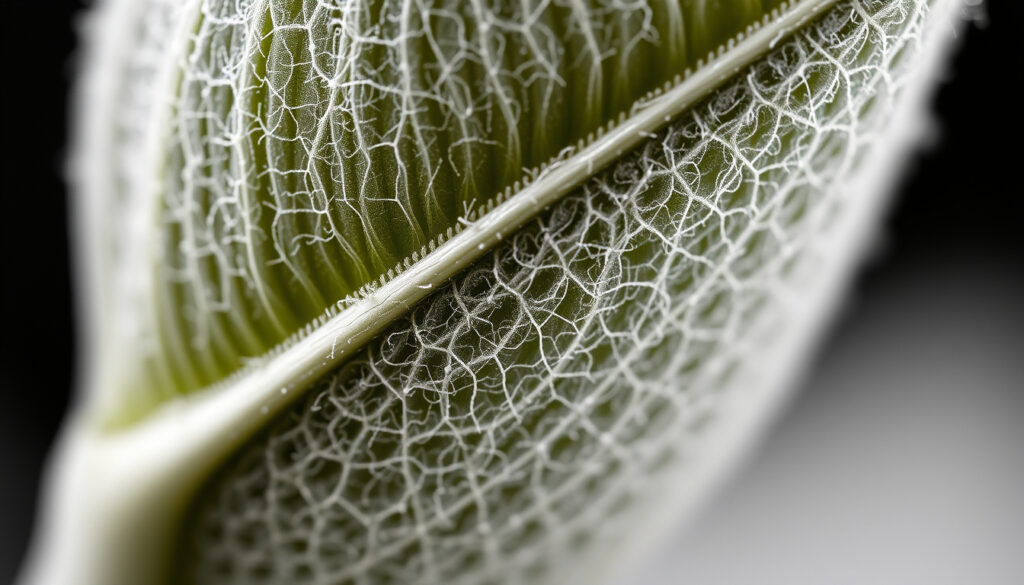
A horsetail stem photographed at thirty times its natural size looks less like a plant and more like a Gothic cathedral. That strange, beautiful transformation is the signature of Karl Blossfeldt, a German photographer who spent decades capturing the architectural precision of nature.
Born: 13 June 1865 ·
Died: 9 December 1932 ·
Known for: Close-up plant photography ·
Notable work: Art Forms in Nature (1928)
Quick snapshot
- Built his own homemade camera for extreme close-ups (Wikipedia)
- Used black-and-white film exclusively (International Center of Photography)
- Published Art Forms in Nature with 120 photographs (Hautlieu Creative)
- Died in 1932 at age 67 (Wikipedia)
- Exact number of photographs he took over his lifetime
- Whether he used artificial lighting in his studio
- Precise modifications he made to his camera lens
- 1865: Born in Schielo, Germany (Wikipedia)
- 1898: Began photographing plants with homemade camera (International Center of Photography)
- 1928: Published Art Forms in Nature (Hautlieu Creative)
- 1932: Died December 9 (Wikipedia)
- Works remain in major museums including MoMA, V&A, and Art Institute of Chicago (Museum of Modern Art)
- Influence continues in design and photography education (Plinth et al.)
Seven key facts about Blossfeldt, one pattern: his life and art were inseparable from teaching.
The table below provides the core biographical and professional data at a glance.
| Label | Value |
|---|---|
| Born | 13 June 1865 |
| Died | 9 December 1932 |
| Nationality | German |
| Occupation | Photographer, Sculptor |
| Known for | Close-up plant photography |
| Movement | New Objectivity |
| Notable work | Art Forms in Nature (1928) |
What techniques did Karl Blossfeldt use?
Did Karl Blossfeldt make his own camera?
- He built a homemade camera with a bellows and a modified lens to capture extreme close-ups (Wikipedia).
- He used a plate camera that was probably self-constructed, with negative formats including 6×9, 9×12, and 13×18 cm (German Wikipedia).
- The lens was an Aplanat 1:36, F=50 cm, and exposure times reportedly ranged from eight to twelve minutes in soft daylight (Museum of Modern Art).
Blossfeldt’s self-built camera gave him the magnification no commercial lens could. For a design teacher, that control meant he could show students nature’s structure at a scale they had never seen.
How did Blossfeldt achieve magnified close-ups?
- He photographed plants at magnifications reportedly up to 30x, and in some cases up to 45x (Wikipedia; Óscar en Fotos).
- His negatives were taken at 1:1 scale and then enlarged as crop enlargements (German Wikipedia).
- He used orthochromatic glass plates, rarely panchromatic, and relied on natural northern light for volume and contrast (International Center of Photography).
The implication: Blossfeldt’s technical choices were driven by teaching, not art-market demands. Every magnification, every long exposure, every neutral background served a single purpose — to reveal the hidden architecture of plants.
Why did Karl Blossfeldt use black and white?
What is the aesthetic of New Objectivity?
- Black and white emphasized form, texture, and structure without color distraction (Digital Photography Courses).
- It aligned with the New Objectivity (Neue Sachlichkeit) movement, which sought objective, documentary presentation and rejected painterly or overly personal style (International Center of Photography).
- Black and white allowed for higher contrast and detail in magnified images (Wikipedia).
- It was more practical for scientific and educational purposes — his photographs were used as teaching aids to show students the beauty and structure of nature (Plinth et al.).
Blossfeldt never considered himself a professional photographer. He was a sculptor who used photography as a classroom tool. By stripping away color, he forced viewers to see plants as pure form — the same way an architect reads a building.
The pattern: New Objectivity gave Blossfeldt a philosophical home, but his black-and-white discipline was already in place. He needed it for the same reason a draftsman uses a single pencil: to see the structure clearly.
How is Blossfeldt’s work unique?
What is Karl Blossfeldt’s photographic style?
- His background as a sculptor influenced his compositional focus on structural forms (International Center of Photography).
- He treated plants as architectural forms, emphasizing symmetry and repetition (Wikipedia).
- His photographs are often compared to buildings or sculptures (Digital Photography Courses).
- He used neutral backgrounds such as gray, white, black, or plain cardboard to isolate the plant forms (Wikipedia).
How does his work differ from other botanical photographers?
- Most botanical photographers aimed for scientific accuracy; Blossfeldt aimed for aesthetic revelation (International Center of Photography).
- He rarely altered the plants, but his lighting and composition turned them into abstract art (Wikipedia).
- His homemade camera gave him a magnification range that no contemporary botanical photographer matched (Museum of Modern Art).
What this means: Blossfeldt sits at the intersection of art and science, but his work belongs to neither. He was a teacher who made photographs that later became art. That accidental lineage is what makes his style irreproducible.
What are some fun facts about Karl Blossfeldt?
How did Karl Blossfeldt die?
- He died on December 9, 1932, at age 67 (Wikipedia).
- He died in Berlin, where he had spent most of his career (International Center of Photography).
What is Karl Blossfeldt’s biography?
- He was born on June 13, 1865, in Schielo, Germany (Wikipedia).
- He initially trained as a sculptor and worked in ironwork (International Center of Photography).
- He studied at the Academy of Royal Crafts Museum in Berlin and later taught there (International Center of Photography).
- He never considered himself a professional photographer; his photographs were used as educational tools for design students (Plinth et al.).
Blossfeldt’s fame as a photographer came after his death. During his lifetime, he was a teacher who used a camera. The irony: his most famous work, Art Forms in Nature, was published only four years before he died.
The pattern: The “fun facts” reveal a man who never chased the spotlight. He was a sculptor turned teacher who happened to invent a new photographic language.
What is Karl Blossfeldt’s most famous work?
What is ‘Art Forms in Nature’?
- His most famous work is the book Art Forms in Nature (original German title Urformen der Kunst), published in 1928 (Hautlieu Creative).
- The book contains 120 of his plant photographs (Wikipedia).
- The photograph of a horsetail stem is one of his most iconic images (Museum of Modern Art).
- His work is held in major museums including MoMA, the Art Institute of Chicago, and the Victoria and Albert Museum (Museum of Modern Art; Wikipedia).
The trade-off: Art Forms in Nature made Blossfeldt famous, but it also pigeonholed him as a botanical photographer. The book’s success obscured the fact that he was first and always a teacher who used photography to teach design.
Timeline
- 1865 – Born on June 13 in Schielo, Germany (Wikipedia)
- 1884–1890 – Apprenticeship in ironwork and sculpture (International Center of Photography)
- 1890–1899 – Studied at the Academy of Royal Crafts Museum, Berlin (International Center of Photography)
- 1898 – Began photographing plants using a homemade camera (International Center of Photography)
- 1928 – Published Art Forms in Nature (Urformen der Kunst) (Hautlieu Creative)
- 1932 – Died on December 9 at age 67 (Wikipedia)
What we know vs. what we don’t
Confirmed facts
- He built his own camera for extreme close-ups (Wikipedia)
- He used black and white film exclusively (International Center of Photography)
- He was trained as a sculptor and taught at the Academy (International Center of Photography)
- His book Art Forms in Nature contains 120 photographs (Wikipedia)
- He died in 1932 (Wikipedia)
What’s unclear
- Exact number of photographs he took over his lifetime
- Whether he used any artificial lighting in his studio
- Precise modifications he made to his camera lens
In their own words
Karl Blossfeldt is best known for his precise photographs of plants; however, he began his career as a sculptor, completing apprenticeships at the ironworks.
– MoMA description (Museum of Modern Art)
Karl Blossfeldt (13 June 1865 – 9 December 1932) was a German photographer and sculptor. He is best known for his close-up photographs of plants and living things.
– Wikipedia entry (Wikipedia)
Karl Blossfeldt’s photographs of plants, flowers and seed heads are as appealing today as they were a century ago.
– Michael Hoppen Gallery
For modern photographers who feel trapped between technical precision and artistic expression, Blossfeldt’s path is a concrete lesson: build the tool you need, use the medium that serves your subject, and let the audience catch up later. The choice is clear: either chase trends or build a camera that sees what no one else can.
For a deeper dive into his methods, explore Karl Blossfeldts black-and-white plant photography and the homemade camera that made it possible.
Frequently asked questions
What was Karl Blossfeldt’s profession?
He was a German photographer and sculptor, best known for his close-up plant photographs. He also taught at the Institute of Royal Arts Museum in Berlin (International Center of Photography).
Where did Karl Blossfeldt study?
He studied at the Academy of Royal Crafts Museum in Berlin (International Center of Photography).
What is Neue Sachlichkeit (New Objectivity)?
It is a German art movement that emerged in the 1920s, emphasizing objective, documentary presentation and rejecting painterly or overly personal style. Blossfeldt is considered one of its main photographers (International Center of Photography).
How did Karl Blossfeldt’s work influence design?
His photographs were used as teaching aids to show design students the beauty and structure of nature, influencing modern design and photography (Plinth et al.).
Are Karl Blossfeldt’s photographs still exhibited?
Yes, his works are held in major museums such as MoMA, the Art Institute of Chicago, and the Victoria and Albert Museum, and are regularly exhibited (Museum of Modern Art).
What is the value of a Karl Blossfeldt photograph?
Original prints can fetch high prices at auction, but the value varies widely depending on the image and provenance. Many are held in museum collections.
Who did Karl Blossfeldt inspire?
He inspired generations of photographers, designers, and artists, including those in the New Objectivity movement and later modernists (International Center of Photography).

George Thompson is Senior Reporter at UrbanMixr.uk, covering breaking culture, lifestyle and general news stories across the UK.