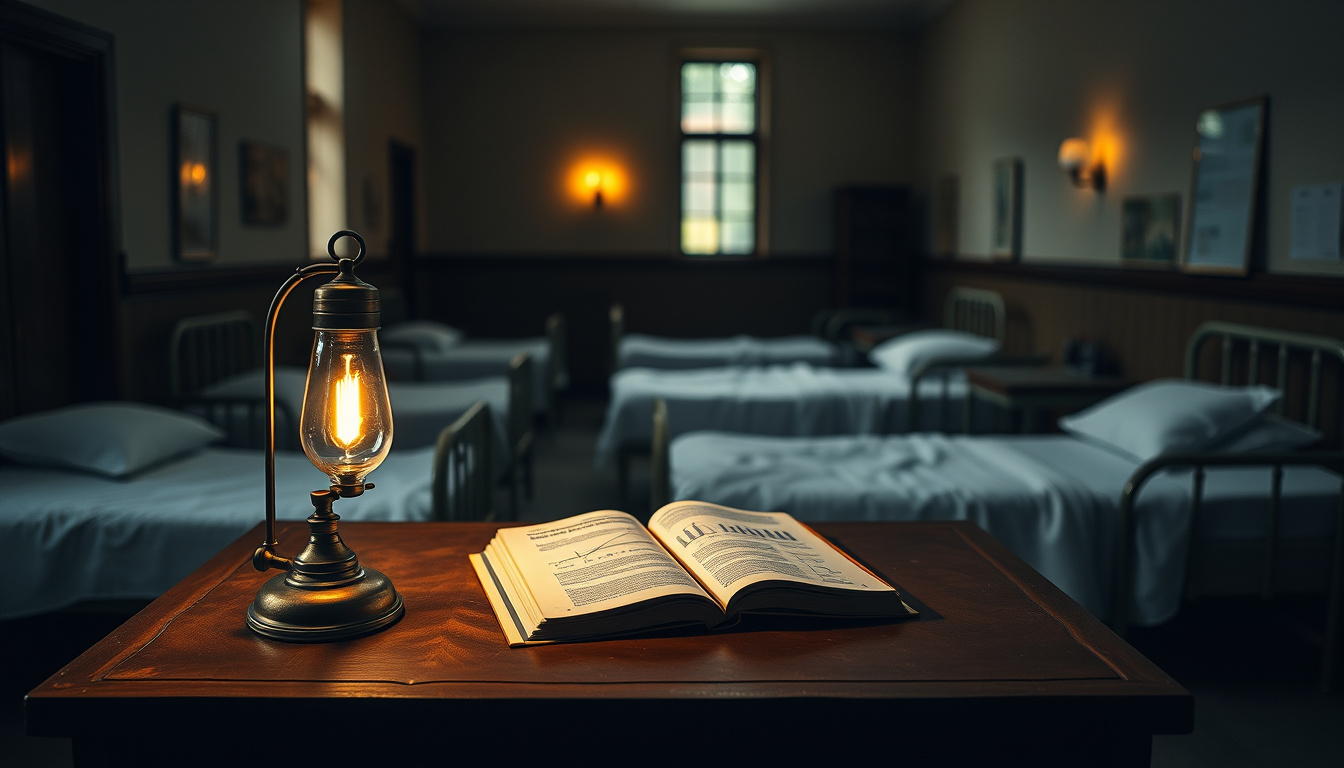
Florence Nightingale is often remembered as a gentle nurse with a lamp, but the real story is far more statistical. During the Crimean War, she led a team of 38 nurses to Scutari and implemented sanitation reforms that slashed the hospital death rate from over 42% to about 22% within months.
Born: 12 May 1820, Florence, Italy · Died: 13 August 1910, London, England · Known for: Founder of modern nursing, sanitation reforms, statistical analysis · Nickname: The Lady with the Lamp · Major work: Notes on Nursing (1860) · Awards: Royal Red Cross (1883)
Quick snapshot
- Born 12 May 1820 in Florence, Italy (Britannica – encyclopedia)
- Founded the first secular nursing school at St Thomas’ Hospital in 1860 (King’s College London – nursing school archive)
- Reduced Scutari mortality from 42% to 22% through sanitation reforms (EBSCO Research Starters – academic database)
- Whether she was literally bedridden at 38 or continued working from a reclining position (Britannica – encyclopedia)
- Exact nature of romantic feelings toward patients (no direct evidence of love beyond professional care) (Wikipedia – biography)
- Degree of personal friendship with Queen Victoria (The National Archives (UK) – government archive)
- 1854: Led 38 nurses to Scutari (NIH/PMC – historical review)
- 1856: Returned to England as national heroine (Britannica – encyclopedia)
- 1860: Published Notes on Nursing and opened training school (King’s College London – nursing school archive)
- Nightingale’s statistical methods continue to influence public health policy (JRSS A / Oxford Academic – statistical journal)
- Her nursing school model spawned modern professional nursing worldwide (National Army Museum – UK military heritage body)
- Debate persists over the “Florence Nightingale effect” and its accuracy (Wikipedia – psychology concept)
Eight key facts, one pattern: Nightingale’s life was defined by a relentless drive to turn data into action.
| Label | Value |
|---|---|
| Full name | Florence Nightingale |
| Birth | 12 May 1820, Florence, Italy |
| Death | 13 August 1910, London, England |
| Nationality | British |
| Occupation | Nurse, statistician, social reformer |
| Known for | Founder of modern nursing, sanitation reform, nursing education |
| Nickname | The Lady with the Lamp |
| Awards | Royal Red Cross (1883) |
What was Florence Nightingale most known for?
Her role in the Crimean War
In October 1854, Nightingale arrived at the Scutari barracks near Istanbul with 38 volunteer nurses (NIH/PMC – historical review). The hospital was filthy, overcrowded, and rife with disease. She set up food kitchens, washed linens, and introduced reading rooms (National Army Museum – UK military heritage body). The impact was dramatic: the death rate among patients fell from about 42% to 22% within months (EBSCO Research Starters – academic database).
Nightingale is remembered as a bedside nurse, but her greatest weapon was a pen – she used statistics to prove that dirt, not bullets, killed soldiers.
Founding modern nursing
In 1860, she used donations from the public to open the Nightingale Training School for Nurses at St Thomas’ Hospital in London (King’s College London – nursing school archive). It was the first secular nursing school in the world, setting professional standards for hygiene, training, and hospital management.
Use of statistics and data visualization
Nightingale pioneered the “coxcomb” chart, a polar-area diagram that vividly showed how preventable diseases killed more soldiers than battle wounds (JRSS A / Oxford Academic – statistical journal). She used these visuals to persuade Queen Victoria and Parliament to fund army sanitary reforms. Her data-driven approach earned her election as the first female Fellow of the Royal Statistical Society in 1858.
Was Florence Nightingale a nurse?
Yes – but she was far more than a nurse. Nightingale trained at the Kaiserswerth Institute in Germany in 1851 (Britannica – encyclopedia). She then became superintendent of a London hospital for gentlewomen before volunteering for the Crimea. Her identity as a nurse was central to her public image, but she also saw herself as a reformer, statistician, and administrator. The term “nurse” in the 19th century was broad; Nightingale elevated it to a profession.
What was Florence Nightingale’s nickname?
Origin of the nickname
Soldiers in Crimea gave her the nickname “The Lady with the Lamp” because they saw her making rounds at night, carrying a lamp to check on wounded men (Britannica – encyclopedia). The image was immortalized by Henry Wadsworth Longfellow in his 1857 poem “Santa Filomena” (Longfellow House – US National Park Service).
How the press used it
British newspapers seized on the romantic image, portraying her as a selfless angel. The nickname stuck, but it partially obscured her tough, analytical side. The real Lady with the Lamp was just as likely to be reading a mortality table as tending a wound.
Did Florence Nightingale ever marry?
Richard Monckton Milnes proposal
In 1849, Nightingale rejected a marriage proposal from the poet and politician Richard Monckton Milnes (Britannica – encyclopedia). She wrote in her diary that marriage would interfere with her “calling” to nursing.
Reasons for not marrying
She never married and had no children. She believed that a husband and family would prevent her from pursuing her life’s work. Her rejection of domesticity was a radical act for a woman of her class in Victorian England.
Did Florence Nightingale go to bed at 38?
The bedridden period after the Crimea
After returning from the war, Nightingale suffered from what is now thought to be brucellosis or chronic fatigue syndrome. She took to her bed in 1857, at age 37, and remained there for much of the rest of her life (Britannica – encyclopedia).
Impact on her work
She was not completely inactive – she continued to write, correspond, and advise from her bedroom. She published over 200 books, reports, and pamphlets while bedridden, including her landmark “Notes on Nursing” (1860). The phrase “went to bed at 38” is a simplification; she worked from bed, but she never stopped working.
Did Queen Victoria ever meet Florence Nightingale?
Meetings between Queen Victoria and Nightingale
They met at least twice: first in 1856 at Balmoral, and again in 1857 at Buckingham Palace (The National Archives (UK) – government archive). Queen Victoria gave Nightingale a brooch inscribed “Blessed are the merciful” and a handwritten letter of thanks.
Queen Victoria’s admiration
The Queen wrote to Nightingale: “You are indeed a great and good person…” (Royal Collection Trust – British royal archive). Nightingale used her access to lobby for army reform, and Victoria supported her sanitary commission.
What is the Florence Nightingale effect?
Definition of the effect
The “Florence Nightingale effect” is a psychological term for a caregiver developing romantic feelings for a patient. It was coined in the 20th century, long after Nightingale’s death (Wikipedia – psychology concept).
Misconceptions versus reality
There is no historical evidence that Nightingale herself experienced such feelings for any patient. She maintained a professional distance and wrote critically about emotional attachments in nursing. The term is a pop-culture invention, not a reflection of her life.
Timeline
- 12 May 1820 – Born in Florence, Italy (Britannica – encyclopedia)
- 1837 – Believed she received a divine calling to nursing (Britannica – encyclopedia)
- 1851 – Trained at Kaiserswerth, Germany (Britannica – encyclopedia)
- 1854 – Led nurses to Scutari during the Crimean War (NIH/PMC – historical review)
- 1856 – Returned to England as a national heroine (National Army Museum – UK military heritage body)
- 1860 – Opened the Nightingale Training School for Nurses (King’s College London – nursing school archive)
- 1860 – Published “Notes on Nursing” (Britannica – encyclopedia)
- 1883 – Awarded the Royal Red Cross (Britannica – encyclopedia)
- 13 August 1910 – Died in London (Britannica – encyclopedia)
Clarity check
Confirmed facts
- Nightingale’s birth and death dates are documented in civil records (Britannica – encyclopedia)
- She founded the first secular nursing school (King’s College London – nursing school archive)
- She transformed hospital sanitation, reducing mortality (EBSCO Research Starters – academic database)
- She met Queen Victoria at least twice (The National Archives (UK) – government archive)
- She was a pioneer of medical statistics (JRSS A / Oxford Academic – statistical journal)
What’s unclear
- Whether she was completely bedridden or worked from a reclining chair (Britannica – encyclopedia)
- Exact romantic feelings toward patients (no primary evidence) (Wikipedia – biography)
- Depth of personal friendship with Queen Victoria (The National Archives (UK) – government archive)
“I attribute my success to this — I never gave or took any excuse.”
Florence Nightingale, in a letter to a colleague (Britannica – encyclopedia)
“You are indeed a great and good person…”
Queen Victoria, in a letter to Nightingale, 1856 (Royal Collection Trust – British royal archive)
For modern healthcare reformers, the lesson is clear: Nightingale’s success came not from angelic devotion but from relentless measurement and persuasion. The next time a hospital administrator talks about “data-driven decisions,” they are channeling the Lady with the Lamp – and that is a legacy worth preserving.
Related reading: Marie Curie: Discoveries, Nobel Prizes, and Death · Wellcome Collection: Free Museum & Library in London
cwfn.uoguelph.ca, triggered.edina.clockss.org, britannica.com, encyclopedia.com, kcl.ac.uk
Frequently asked questions
What did the Florence Nightingale lamp symbolize?
The lamp symbolized her nightly rounds caring for wounded soldiers, and became a metaphor for compassion and guidance in nursing.
How did Florence Nightingale die?
She died peacefully in her sleep at age 90 in London, on 13 August 1910 (Britannica – encyclopedia).
Was Florence Nightingale a feminist?
She did not call herself a feminist, but she challenged Victorian gender roles by pursuing a career and rejecting marriage (Britannica – encyclopedia).
What were Florence Nightingale’s religious beliefs?
She was a devout Christian but questioned organized religion; she believed her calling came from God (Britannica – encyclopedia).
How did Florence Nightingale change nursing?
She established professional training, hygiene standards, and the use of statistics in hospital management, creating the modern nursing profession (King’s College London – nursing school archive).
Was Florence Nightingale ever a mother?
No, she never married and had no children.

George Thompson is Senior Reporter at UrbanMixr.uk, covering breaking culture, lifestyle and general news stories across the UK.