Some guitar heroes are built by radio play; Rory Gallagher built his following the slower way, gig by gig, continent by continent. By the time Eric Clapton was saying that Gallagher got him back into the blues, Gallagher had already toured America more than 25 times (About Rory (fan biographical archive)).
Born: 2 March 1948, Ballyshannon, Ireland · Died: 14 June 1995, London, England · Genres: Blues rock, electric blues, folk · Instruments: Guitar, vocals, harmonica · Years active: 1963–1995
Quick snapshot
- Began playing guitar at age nine (Rayo (UK radio publication)).
- Taste, the power trio he fronted, opened for Cream and Blind Faith (Songfacts (music facts database)).
- Released the self-titled debut album in 1971 (IMDb (film and music database)).
- Taste disbanded at the end of 1970 (About Rory). (Rayo (UK radio publication))
- His personal religious beliefs in later life.
- The specific path from heavy drinking to liver failure.
- Precise worldwide album sales, which vary widely by source.
- 1948: born in Ballyshannon (Dictionary of Irish Biography).
- 1965: Taste forms; Cream and Blind Faith dates follow (About Rory).
- 1971: solo career and debut album land the same year (The Irish Echo).
- 1995: the run ends in London (Official site).
- Reissues and archival recordings keep introducing Gallagher to new listeners.
- Young blues and rock guitarists still hold him up as a reference point.
- The live albums, especially Irish Tour, are the usual entry point for new fans.
Eight facts, one pattern: the biographical record describes a working musician whose identity lived in his records and his live shows, not in celebrity machinery.
| Attribute | Detail | Source |
|---|---|---|
| Full name | William Rory Gallagher | — |
| Born | 2 March 1948, Ballyshannon, Ireland | Dictionary of Irish Biography (national biographical record) |
| Died | 14 June 1995, London, England | Dictionary of Irish Biography (national biographical record) |
| Nationality | Irish | — |
| Occupation | Musician, singer, songwriter | — |
| Genres | Blues rock, electric blues, folk | — |
| Instruments | Guitar, vocals, harmonica | — |
| Years active | 1963–1995 | — |
What did Eric Clapton think of Rory Gallagher?
It’s the first question most fans ask, and the answer says more about Gallagher’s reputation than any chart position. Clapton was blunt about it, and the quote stuck.
Who did Eric Clapton say was the greatest guitarist?
Rory Gallagher. Clapton has described Gallagher as the greatest guitarist he had ever seen and has credited Gallagher with getting him back into the blues (uDiscover Music (Universal Music publication)).
That endorsement carried unusual weight. For a generation of players, Clapton was the reference point for electric blues, which made his praise feel like a direct recommendation. The fact that Gallagher never chased that spotlight is exactly why the quote keeps circulating.
Who did Paul McCartney say was the best guitarist?
- McCartney has been quoted praising Gallagher’s talent and influence (About Rory).
The McCartney connection matters because it placed Gallagher in a lineage beyond blues circles. If a Beatle was name-checking an Irish guitarist, the word spread well beyond the clubs where Gallagher played.
Who was Ozzy’s favorite guitarist?
- By Ozzy Osbourne’s own account, it was Rory Gallagher — the quote appears in the final section.
Ozzy’s admiration says something about Gallagher’s reach: he was not just a blues purist’s hero but a touchstone for players building louder, heavier music. That range is rare.
The pattern is consistent: the players who praise Gallagher most are the ones who heard him at his peak, and they pass the name on. That’s how a musician with limited radio play becomes a legend — one guitar hero at a time.
Why is Rory Gallagher so famous?
Gallagher’s fame is the kind that grows after the fact. He never chased a string of radio hits; he built something sturdier — a live reputation that musicians passed on to each other.
What made Rory Gallagher an iconic guitarist?
- His official biography describes a “self-taught virtuoso” who became an internationally acclaimed figure, and who shunned the trappings of fame and stardom (Rory Gallagher’s official site (artist biography)).
- Taste became a late-1960s power trio that mixed blues-rock with folk, pop, and jazz elements (Innerviews (music interview magazine)).
The guitar was only part of the equation. Gallagher’s shows were the real advertisement: long, loud, and unscripted, pulling from blues, folk, and rock in a mix that became known as blues-rock before it was a radio format. The blend made him hard to file in one category and easy to love in person.
How did Rory Gallagher influence rock music?
- His playing influenced generations of guitarists, according to retrospectives from The Irish Echo (The Irish Echo (Irish-American newspaper)).
- Studio albums such as Tattoo and the live record Irish Tour are still treated as high-water marks (The Irish Echo).
What Gallagher passed on was an approach: play the song, not just the solo; let the tone do the work; stay loyal to the blues even when rock got bigger. That philosophy shows up in players who never met him.
The paradox is that Gallagher’s fame looks accidental from the outside but was deliberate in practice: he chose the road over the charts, and the road chose him back.
The pattern: his discipline kept him off the charts but on the shortlist of every serious guitar player.
What is Rory Gallagher’s greatest hit?
This question is a trap, because Gallagher never operated like a singles artist. The closer anyone gets to a “greatest hit,” the more the answer sounds like a conversation, not a chart fact.
Which song is Rory Gallagher’s most popular?
“Bad Penny” is the song most often named as Gallagher’s signature, with “Bullfrog Blues” close behind as a live favorite (Songfacts).
“Bad Penny” had more commercial traction than most of his catalog, but its real life was on stage, where Gallagher stretched it into a showcase. “Bullfrog Blues” worked the same way — a song that existed to be played, not polished.
What are Rory Gallagher’s top songs?
- Beyond “Bad Penny”: “Bullfrog Blues,” a staple of his live sets.
- Album favorites: Tattoo and the Irish Tour live record — the titles fans argue about most.
The honest answer is that Gallagher’s catalog works as a body rather than a single track. New fans usually arrive through one song and stay for the albums.
The trade-off is clear: Gallagher traded the machinery of the single for the arc of the album, and that trade-off is why his catalog still sounds alive decades later.
Was Rory Gallagher Catholic or Protestant?
In Ireland, the question carried real weight during Gallagher’s lifetime. His own answer, as far as the public record shows, was to keep the focus on music.
What was Rory Gallagher’s religious background?
- He was raised Catholic, according to biographical profiles (Rayo).
Catholicism was part of the social landscape of his generation, but Gallagher never turned it into a stage identity. His music carried no sectarian message, and his public statements on religion were rare.
Did Rory Gallagher identify with any religion?
- What’s documented: a Catholic upbringing and a lifelong silence about religious detail later in life.
- What’s unclear: whether he practiced privately or identified with any church as an adult.
The clearest statement Gallagher ever made on the subject was indirect: in a country where the label shaped headlines, he let the music stand as his public identity.
What this means: the sectarian question mattered less to Gallagher than the blues did, and that indifference became part of his appeal.
Was Rory Gallagher a big drinker?
The short answer is yes, and it’s the part of Gallagher’s story that most biographers handle carefully. The drinking shaped the last decade of his life, and its medical cost was severe.
Did Rory Gallagher struggle with alcohol?
- Gallagher’s reputation for heavy drinking is documented across biographical profiles (IMDb).
The effect was gradual but real. In the end, the toll was physical: Gallagher underwent a liver transplant in London, and his body could not recover.
What was Rory Gallagher’s cause of death?
- He died on 14 June 1995 from complications following a liver transplant (Official site).
The underlying cause is generally reported as alcohol-related liver disease, though the precise path from drinking to transplant was never laid out in public.
The stamina that made Gallagher’s shows legendary had a bill attached. The drinking that came with late nights and long tours also put him in a London hospital bed at 47 — a trade no one would describe as worth it.
The sobering part is arithmetic: a musician born in 1948 and gone in 1995 left behind a catalog that spans barely half a lifetime. The drinking cut it shorter.
Rory Gallagher’s life in key dates
Five dates, one arc: an Irish childhood, a power-trio apprenticeship, a solo run, and a short exit. The years in between were spent on the road.
| Date | Milestone | Source |
|---|---|---|
| Born in Ballyshannon, County Donegal. | — | |
| Forms Taste, the blues-rock trio. | Dictionary of Irish Biography | |
| Taste disbands at the end of the year. | — | |
| Launches solo career with the self-titled debut album. | The Irish Echo | |
| Dies in London after a liver transplant. | — |
What the dates show: a decade of dues-paying, a short peak, and a fast end. The gaps are as meaningful as the entries — no long pauses for reinvention, because Gallagher never stopped working.
What’s confirmed and what’s still unclear
Confirmed facts
- Gallagher died on 14 June 1995 from complications following a liver transplant (Official site).
- He was raised Catholic (Rayo).
- Taste became a late-1960s power trio that mixed blues-rock with folk, pop, and jazz (Innerviews).
- “Bad Penny” is the song most often named as Gallagher’s signature (Songfacts).
What’s unclear
- His personal religious beliefs in later life.
- The precise medical path from drinking to liver failure.
- Exact worldwide album sales, which vary wildly across sources.
The split between the two lists is the shape of Gallagher’s career: the public record is solid where it counts, and the private record stayed private.
Rory Gallagher, as remembered by his peers
The fastest way to understand Gallagher’s reputation is to look at who admired him. Two quotes do most of the work.
Eric Clapton has described Rory Gallagher as the greatest guitarist he had ever seen, adding that Gallagher got him back into the blues.
— Eric Clapton, as reported by uDiscover Music
Ozzy Osbourne has repeatedly named Rory Gallagher as his favorite guitarist and a major influence.
— Ozzy Osbourne, as cited in uDiscover Music
What’s striking isn’t just the praise — it’s the pattern. Players from opposite ends of rock, from blues purists to metal frontmen, land on the same Irish name when the conversation turns serious.
Read together, the quotes explain the influence: Gallagher was the guitarist other guitarists watched, measured themselves against, and quietly recommended.
Why Rory Gallagher still matters
Gallagher’s story never needed a chart coronation. It lives in the live albums, in the Stratocaster tone, and in the guitarists who still name him first. For today’s players, the path he carved is still the one worth taking: play more, chase less, trust the audience that shows up — or stay a cover act forever.
Related reading: for more on the guitarists who shared Gallagher’s world, see our profiles of Eric Clapton 2024: Health, Love Life, Music Updates and John Fogerty: Biography, Biggest Hits & Latest News (2025).
Frequently asked questions
What was Rory Gallagher’s first album?
His self-titled debut album, Rory Gallagher, followed the breakup of Taste in 1971.
How many albums did Rory Gallagher release?
He released a steady catalog of studio and live albums from 1971 onward, and posthumous compilations have continued since 1995. The exact count depends on whether compilations and box sets are included.
What guitar did Rory Gallagher play?
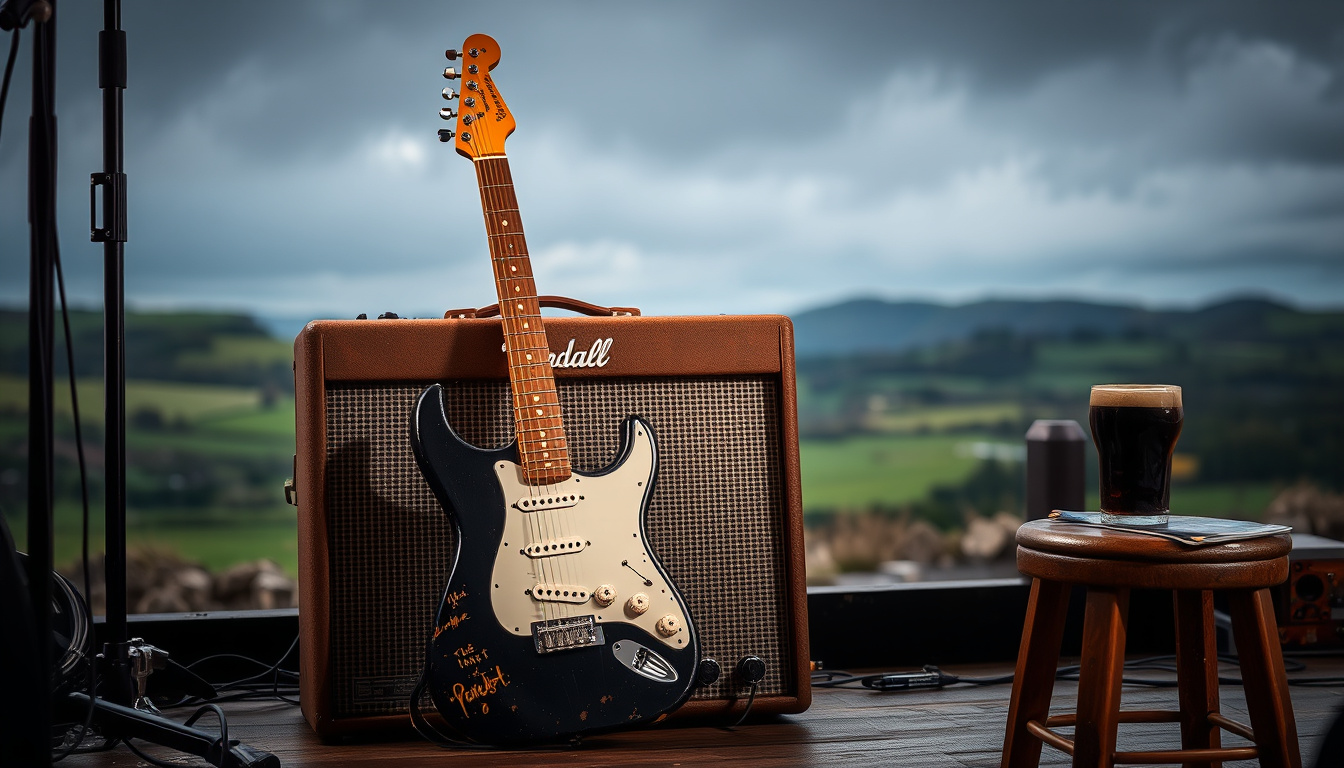
A Fender Stratocaster, the model most associated with his sound and image (Innerviews).
How old was Rory Gallagher when he died?
47. He was born on 2 March 1948 and died on 14 June 1995 (IMDb).
Is Rory Gallagher in the Rock and Roll Hall of Fame?
No. Gallagher has been inducted into the Blues Hall of Fame, but the Rock and Roll Hall of Fame has not inducted him.
What is Rory Gallagher’s net worth?
No reliable public figure was ever published during his life. His estate continues to earn from reissues, streaming, and licensing, but exact numbers are not public.

George Thompson is Senior Reporter at UrbanMixr.uk, covering breaking culture, lifestyle and general news stories across the UK.