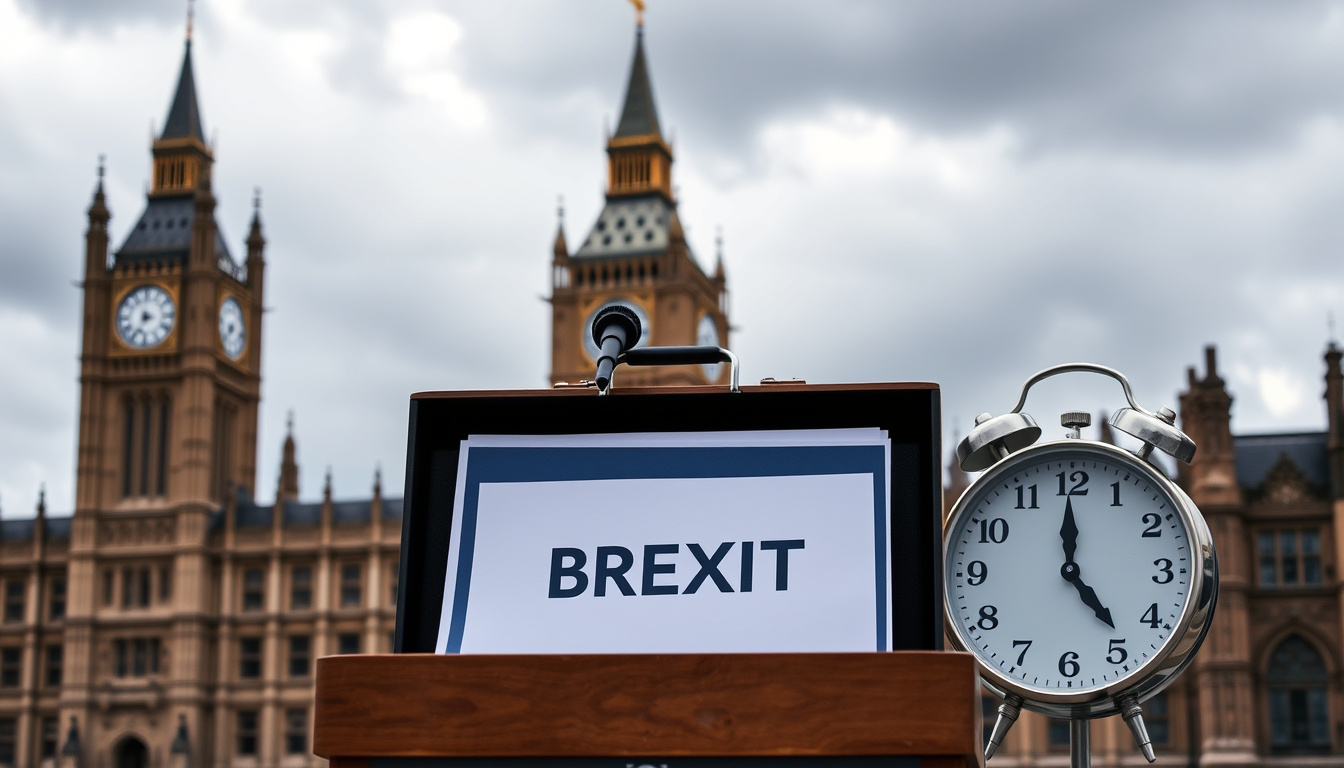
Few British prime ministers spark the kind of lingering curiosity that Theresa May still does, years after leaving 10 Downing Street. She stepped into the highest office during one of the most volatile periods in modern British politics, only to be undone by the very forces that carried her there, and today she is quietly building a very different kind of legacy — in the House of Lords, at the centre of environmental advocacy, and as a public figure whose story is still being written.
Served as Prime Minister: 2016–2019 ·
Born: 1 October 1956 ·
Political Party: Conservative ·
Estimated Net Worth: £1–£2 million ·
Nickname: Maybot
Quick snapshot
- Exact net worth figure — estimates range from £1 million to £2 million
- Details of her father’s early career before becoming a vicar
- Whether she will return to a frontbench political role
- 13 July 2016 — Becomes Prime Minister (Wikipedia)
- 18 April 2017 — Calls snap election, loses majority (BBC News)
- 24 July 2019 — Resigns as Prime Minister (The Office of Theresa May)
- 2024 — Stands down from Commons, enters House of Lords (The Office of Theresa May)
- Active role in the House of Lords as Baroness May of Maidenhead (The Office of Theresa May)
- Chair of the Aldersgate Group, an environmental coalition (The Office of Theresa May)
- Continues advocacy on modern slavery through her commission (The Office of Theresa May)
Seven key facts about Theresa May, from her early life to her current role in the House of Lords.
| Label | Value |
|---|---|
| Full Name | Theresa Mary May (née Brasier) |
| Born | 1 October 1956 |
| Prime Minister Term | 13 July 2016 – 24 July 2019 |
| Spouse | Philip May |
| Children | None |
| Education | St Hugh’s College, Oxford (BA Geography) |
| Previous Office | Home Secretary (2010–2016) |
Why did Theresa May step down?
What led to Theresa May’s resignation?
Theresa May’s downfall was not a single event but a chain reaction set in motion by the 2017 snap election. She called the election on 18 April 2017 hoping to strengthen her majority ahead of Brexit negotiations, but the gamble backfired spectacularly. The Conservative Party lost its parliamentary majority, forcing May into a confidence-and-supply arrangement with the Democratic Unionist Party (BBC News). From that point, her authority was permanently weakened.
What was the Brexit deal issue?
Over the next two years, May attempted three times to get her Brexit withdrawal agreement through the House of Commons. Each time it failed. The core problem was the Irish backstop — a mechanism designed to prevent a hard border between Northern Ireland and the Republic of Ireland — which both hardline Brexiteers and the Democratic Unionist Party rejected. By early 2019, her own party had lost confidence in her ability to deliver Brexit (BBC News).
On 24 May 2019, May stood outside 10 Downing Street and announced her resignation as Conservative leader, effective 7 June. She was succeeded by Boris Johnson on 24 July 2019 (The Office of Theresa May).
May bet her premiership on a single election gamble — and lost. The snap election cost her both her majority and her room to negotiate, leaving her trapped between a fractured party and an unworkable deal.
The implication: May’s resignation was not a scandal-driven exit but a political arithmetic problem. She could not command a majority for her central policy, and in a parliamentary system, that is fatal.
What is Theresa May doing now?
Where does Theresa May live now?
May splits her time between a home in the Berkshire constituency she represented for 27 years and a London residence. She stepped down as MP for Maidenhead in summer 2024 after announcing in March of that year that she would not stand at the next general election (CNN).
What is Theresa May’s role in the House of Lords?
In autumn 2024, May was made a life peer, taking the title Baroness May of Maidenhead. Her official biography states she “continues to play an active role in the House of Lords” (The Office of Theresa May). This is a conventional path for former prime ministers, but May’s move to the Lords came later than many of her predecessors — nearly five years after leaving office.
What is the Aldersgate Group?
May chairs the Aldersgate Group, an alliance of business leaders, politicians, and environmental organisations that advocates for ambitious climate policy. The group pushes for net-zero-aligned regulation and has been active in shaping the UK’s environmental agenda since the 1990s. She also chairs the Modern Slavery Commission, a body that examines how to strengthen the UK’s fight against forced labour and human trafficking.
May has quietly built a post-premiership identity around two issues — climate and modern slavery — that barely featured in her time as PM. It is a deliberate shift from the Brexit chaos that defined her Downing Street years.
The pattern: May’s post-PM life is structured around appointed roles, not elected ones. She has moved from the rough-and-tumble of the Commons to the deliberative chamber of the Lords, where she can influence policy without carrying the weight of a party leadership.
What is Theresa May’s net worth?
How did Theresa May earn her wealth?
May’s wealth comes from a combination of her parliamentary salary, ministerial earnings, book deals, and speaking fees. As Prime Minister, she earned £150,402 per year. She has published a memoir, The Abuse of Power, and commands significant fees for speaking engagements on the international circuit. She also holds property in Berkshire and London.
What is Theresa May’s estimated net worth?
Most estimates place her net worth between £1 million and £2 million. This is modest compared to many former prime ministers — Tony Blair’s net worth is estimated at over £60 million, and David Cameron’s at over £10 million. May has not been involved in any major financial controversies, and her wealth appears to be built on salary, property, and standard post-office earnings rather than lucrative private-sector board roles (Politics.co.uk).
The catch: the £1–2 million figure is an estimate. May has not publicly disclosed her net worth, and no independent audit exists. The range reflects typical earnings for a former PM of her profile, but the exact figure is unknowable from public records.
What is Theresa May’s nickname?
Why is Theresa May called the ‘Maybot’?
The nickname “Maybot” emerged during the 2017 general election campaign, coined by journalists and amplified on social media. It referred to her repetitive, robotic delivery on the campaign trail — particularly her repeated phrase “strong and stable leadership” which she used so often it became a meme. The Museum of the Prime Minister notes that the nickname was “associated with her rote responses to questions.”
What are other nicknames?
Allies reportedly called her “Submarine May” for disappearing when the pressure mounted — a reference to her tendency to go quiet during crises. She was also dubbed “Theresa the Appeaser” by critics who felt she conceded too much to the European Union during Brexit negotiations (Sky News).
Who was Theresa May’s father?
Her father, Hubert Brasier, was a Church of England vicar. He died in a car accident in 1981, when May was 24. She has spoken about the profound impact his death had on her, and her Christian faith — she is a regular attender at Church of England services — is a consistent thread in her public life (BBC News).
Does Theresa May have children?
No. May has been open about the fact that she and her husband Philip do not have children. She has said in interviews that it is “one of the regrets of her life” that they were unable to have children, but she has also emphasised that she considers her public service a form of legacy in its own right.
What religion is Theresa May?
She is a practising Anglican and attends the Church of England. She is not Catholic, a misconception that sometimes arises from her conservative social views on certain issues. Her father’s role as a vicar placed the Church at the centre of her upbringing.
What this means: the “Maybot” label stuck because it captured a real tension in her public persona — a politician who was personally warm and privately compassionate but who delivered her political message with a stiffness that invited mockery. It is a rare case of a nickname that genuinely shaped public perception of a leader.
Was Theresa May a good prime minister?
What were Theresa May’s achievements?
May oversaw the triggering of Article 50, formally beginning the UK’s withdrawal from the European Union. She maintained economic stability in the immediate aftermath of the 2016 referendum, and her government introduced the Modern Slavery Act, which strengthened protections for victims of forced labour. She also appointed the first female Home Secretary to follow her in that role, Amber Rudd, and promoted a social reform agenda that included mental health funding and the expansion of grammar schools.
What were her failures?
The 2017 snap election cost the Conservatives their majority and left her leading a minority government. She was unable to pass her Brexit withdrawal agreement through Parliament despite three attempts. Her handling of the Windrush scandal — in which legal long-term residents from the Caribbean were wrongly denied rights — was widely criticised, and she issued a formal apology in the House of Commons (BBC News).
How is she ranked among UK prime ministers?
Historical rankings and opinion polls consistently place May in the lower half of post-war prime ministers. A 2021 YouGov poll ranked her 11th out of 14 post-war leaders. Her premiership is remembered primarily for the Brexit paralysis that defined it, though supporters argue that she inherited a near-impossible situation and handled it with more integrity than her successor.
The trade-off: May was a prime minister caught between two incompatible mandates — the 2016 referendum result to leave the EU and the 2017 election result that denied her a majority. She chose to pursue a compromise Brexit deal that satisfied almost nobody. The question of whether she was “good” depends on whether you believe a compromise was ever possible.
Timeline of Theresa May’s career
Nine key dates that trace May’s journey from a vicar’s daughter in Eastbourne to the House of Lords.
| Date | Event |
|---|---|
| 1 October 1956 | Born in Eastbourne, Sussex |
| 1980 | Marries Philip May |
| 1997 | Elected MP for Maidenhead |
| 12 May 2010 | Appointed Home Secretary |
| 13 July 2016 | Becomes Prime Minister |
| 18 April 2017 | Calls snap general election |
| 24 May 2019 | Announces resignation as Conservative leader |
| 24 July 2019 | Formally resigns as Prime Minister |
| 2024 | Made a life peer, enters House of Lords |
The timeline shows a career of rapid ascent and abrupt decline, with her legacy still in formation.
Confirmed facts vs. what remains unclear
Confirmed facts
- Served as Prime Minister of the United Kingdom from 2016 to 2019 (Wikipedia)
- Born 1 October 1956 in Eastbourne, Sussex (BBC News)
- Married to Philip May since 1980 (Wikipedia)
- Has no children (BBC News)
- Attends Church of England (BBC News)
- Father was Hubert Brasier, a Church of England vicar (BBC News)
- Announced resignation on 24 May 2019 (The Office of Theresa May)
- Made a life peer in autumn 2024 (The Office of Theresa May)
What remains unclear
- Exact net worth — estimates range from £1 million to £2 million, with no public disclosure
- Details of her father’s early career before entering the clergy
- Whether she will eventually return to a frontbench or ministerial role in the Lords
- Full extent of her speaking fees and private earnings since leaving office
- Whether she will ever be seen as anything other than the PM who failed to deliver Brexit
- The specific outcomes of her Modern Slavery Commission
- Whether she will take on additional public roles in the future
- How her legacy will ultimately be defined
The balance of certainty and uncertainty reflects the limits of public knowledge about a private figure.
Quotes that captured the moment
“I believe in a better Britain. I believe in the people of this country. And I believe in the future of our country.”
— Theresa May, resignation speech, 24 May 2019
“The ‘Maybot’ became a shorthand for a leader who seemed scripted, repetitive, and out of touch with the public mood — a stark contrast to the more informal style of the campaign that preceded her.”
“Allies branded her ‘Submarine May’ for disappearing when the PM needed her — a revealing nickname from within her own ranks.”
— Sky News
“In her final weeks as prime minister, Theresa May sought advice from predecessors about life after office. The transition from Downing Street is one few are prepared for.”
These quotes capture the tension between May’s public persona and her private reality.
What her post-PM life tells us
May’s trajectory after No. 10 is not the story of a fallen leader retreating from public life. She has taken on serious institutional roles — the Lords, the Aldersgate Group, the Modern Slavery Commission — and has been more active than many recent former prime ministers. But the question that lingers is whether she will ever be seen as anything other than the PM who failed to deliver Brexit. For the British electorate, the judgment is already clear: in a 2021 YouGov ranking of post-war prime ministers, she placed 11th out of 14 — above only Liz Truss, Anthony Eden, and Alec Douglas-Home. For May herself, the implication is equally clear: her legacy will be shaped by what she does next, not by what she could not do in Downing Street.
Frequently asked questions
Is Theresa May married?
Yes, she married Philip May in 1980. Philip is a former investment banker and they have been together since meeting at Oxford University.
What was Theresa May’s maiden name?
Her maiden name is Brasier. She was born Theresa Mary Brasier.
What is Theresa May’s educational background?
She studied Geography at St Hugh’s College, Oxford, graduating with a BA degree. She later worked at the Bank of England and the Association for Payment Clearing Services before entering politics.
What is Theresa May’s height?
She is approximately 5 feet 8 inches (1.73 m) tall.
What constituency did Theresa May represent?
She was the Member of Parliament for Maidenhead in Berkshire from 1997 until she stood down in 2024. She held the seat for 27 years.
What is Theresa May’s full name?
Her full name is Theresa Mary May. Since entering the House of Lords, she is formally styled Baroness May of Maidenhead.
What is Theresa May doing now in 2025?
She is an active member of the House of Lords, chairs the Aldersgate Group (an environmental coalition), and leads the Modern Slavery Commission. She also gives speeches and continues her advocacy work on climate and human rights.
These FAQs address the most common points of curiosity about May’s life and career.
Related reading
- Jacob Rees-Mogg: What He Does Now, Wealth & Controversies
- Sir Jim Ratcliffe: Net Worth, Football Clubs, Knighthood
These related articles offer further context on prominent British figures.

George Thompson is Senior Reporter at UrbanMixr.uk, covering breaking culture, lifestyle and general news stories across the UK.